Does Renters Insurance Cover Water Damage? Pipes, Leaks and Floods Explained
A burst pipe can damage thousands of dollars in personal belongings, but not every water-related loss is covered by renters insurance. Learn the difference between sudden leaks, flooding and neglected maintenance, and what to document before filing a claim.
This article is general information, not financial advice. Rates, prices and rules change; check the details with a qualified professional or the lender before you decide.
In this article
- When Does Renters Insurance Cover Water Damage?
- Eight Water Damage Scenarios: What Is Usually Covered?
- Does Renters Insurance Cover Flood Damage?
- Does Renters Insurance Cover Sewer Backup?
- Does Renters Insurance Cover Mold Caused by Water Damage?
- What Does Renters Insurance Actually Pay For?
- Renters Insurance vs. Landlord Insurance: Who Pays?
- How Much Will Renters Insurance Pay for Water Damage?
- How to File a Renters Insurance Water Damage Claim
- How to Reduce Water Damage Risk in a Rental
- Frequently Asked Questions
- Final Takeaway
Does renters insurance cover water damage? In many situations, yes. A standard renters insurance policy may cover personal belongings damaged by a sudden and accidental plumbing leak, burst pipe or another covered event. However, it generally does not cover damage caused by flooding, gradual leaks or excluded maintenance problems.
The cause of the water damage matters more than the amount of water involved. A ceiling leak caused by an unexpectedly broken pipe may be treated differently from rainwater entering an apartment during a flood, even when both incidents destroy the same furniture and electronics.
Renters should also distinguish between damage to their personal belongings and damage to the building itself. Renters insurance generally protects the tenant's covered property and liability exposures, while the landlord's property insurance typically addresses the building. Coverage depends on the policy wording, exclusions, limits and circumstances.
When Does Renters Insurance Cover Water Damage?
Renters insurance generally covers water damage to personal property when the damage results from a sudden, accidental event that the policy insures. Common examples include unexpected plumbing failures, certain appliance leaks and water entering from another apartment after a covered incident.
Many renters policies are based on covered perils, meaning the policy identifies the events against which personal belongings are insured. Water escaping suddenly from a plumbing system may qualify, while water accumulating over months often does not.
Insurance companies investigate the cause of damage before approving a claim. A pipe bursting without warning and a pipe leaking for six months can produce similar physical damage but different coverage decisions.
Does Renters Insurance Cover a Burst Pipe?
A burst pipe may be a covered cause of water damage under renters insurance, particularly when the event is sudden and accidental. If the released water ruins clothing, furniture or electronics, the tenant may be able to claim the loss under personal property coverage.
The insurer will examine the circumstances, including policy exclusions and any applicable duties to prevent further damage. A tenant who discovers a leak should notify the landlord immediately and take reasonable steps to protect belongings without risking personal safety.
The building's plumbing repair itself is ordinarily a matter for the property owner or another responsible party rather than the tenant's personal property coverage.
Eight Water Damage Scenarios: What Is Usually Covered?
Renters insurance coverage depends on the source of the water, the damaged property and the policy's specific terms. The table below compares eight common situations and their typical insurance treatment.
Water damage scenario | Typical renters insurance treatment | What to check |
Burst plumbing pipe | Often covered for damaged belongings | Sudden and accidental water discharge |
Upstairs neighbor's plumbing leak | Often covered when caused by a covered event | Source of leak and exclusions |
Overflowing bathtub | May be covered depending on cause and circumstances | Accidental overflow, negligence and policy wording |
Washing machine or dishwasher failure | Often covered for sudden accidental damage | Cause, exclusions and property ownership |
Sewer or drain backup | Often excluded without additional coverage | Water backup endorsement |
Roof leak after a storm | May be covered if the policy's requirements are satisfied | Covered weather event and resulting damage |
Long-term moisture and mold | Frequently excluded or restricted | Gradual damage and mold provisions |
River overflow or natural flood | Generally excluded | Separate flood insurance |
These are typical outcomes, not guarantees of payment. Two renters with apparently similar damage may receive different decisions because their policies, endorsements and loss circumstances differ.
Does Renters Insurance Cover Water Damage From an Upstairs Neighbor?
Renters insurance may cover your personal property when an accidental leak from an upstairs apartment damages your belongings. For example, a sudden plumbing failure above your unit could soak a mattress, computer and clothing.
The immediate coverage question is whether the incident qualifies under your own policy. Responsibility for the leak and reimbursement between insurers may be addressed separately.
Document the condition of your belongings and notify both the landlord and your insurer. Do not assume that the upstairs neighbor must personally reimburse every loss before your own insurance can respond.
Does Renters Insurance Cover an Overflowing Bathtub?
An accidental bathtub overflow may qualify for coverage, but the insurer will evaluate the cause and any applicable exclusions. The distinction between an isolated accident and repeated or neglected water problems can be important.
Damage to your own belongings may involve personal property coverage. Damage to another apartment or the building may raise separate liability questions, particularly if your actions contributed to the incident.
Report the circumstances accurately. An insurer can investigate whether the event was accidental and whether any liability protection applies.
Does Renters Insurance Cover a Leaking Dishwasher?
A sudden dishwasher or washing machine leak may be covered when escaping water damages insured personal belongings. Coverage is less certain if the appliance has leaked gradually or if the damage results from an excluded maintenance condition.
The appliance itself may or may not be insured, depending on who owns it, its cause of failure and the policy. Damage to flooring or cabinetry is generally distinct from damage to the tenant's personal property.
Preserve photographs and any available maintenance records. These can help establish whether the loss occurred unexpectedly or developed over an extended period.
Does Renters Insurance Cover Flood Damage?
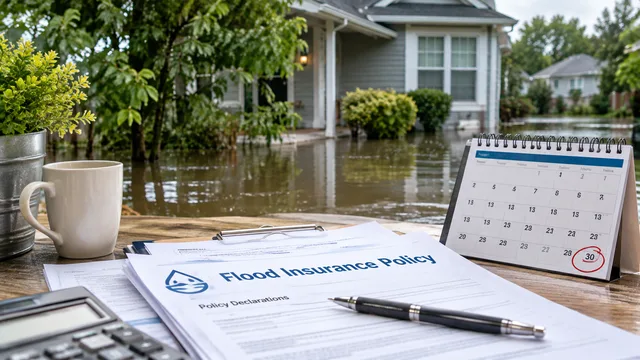
Standard renters insurance generally does not cover damage caused by flooding from external sources, such as overflowing rivers, storm surge or widespread surface-water accumulation. Flooding is treated differently from many ordinary plumbing incidents.
A tenant whose apartment is flooded after heavy rainfall may need separate flood coverage for personal possessions. The landlord's property insurance does not automatically pay for the renter's furniture, clothing or electronics.
Flood insurance availability and terms should be reviewed separately. The National Flood Insurance Program and some private insurers offer flood coverage for qualifying personal property.
Water Damage vs. Flood Damage
The difference between ordinary water damage and flooding is the origin and behavior of the water. An unexpected burst supply pipe is not the same as water flowing across the ground and entering a building.
Example | Typical insurance classification |
Broken pipe sprays water into bedroom | Sudden plumbing discharge |
Storm causes river to overflow into apartment | Flood |
Sewer water backs up through floor drain | Water or sewer backup |
Roof is damaged by covered windstorm and rain enters | Potential covered storm-related loss |
Water slowly seeps through basement walls | Seepage or gradual water intrusion |
The insurance policy's definitions control the final determination. Never rely solely on the everyday meaning of the word "flood."
Does Renters Insurance Cover Sewer Backup?
Sewer and drain backup damage is commonly excluded from standard renters policies unless the renter has appropriate additional coverage. A water backup endorsement may provide protection for defined losses involving drains, sewers or sump pumps.
Coverage limits and deductibles for water backup can differ from the main policy. Some endorsements provide only a relatively limited amount of protection compared with the full personal property coverage limit.
Ask the insurer whether the endorsement protects tenant-owned possessions in an apartment and what events it excludes. A water backup endorsement should not be confused with comprehensive flood coverage.
Does Renters Insurance Cover Mold Caused by Water Damage?
Mold damage is often excluded or subject to special restrictions, although limited coverage may apply when it directly results from a covered water incident. Insurers commonly distinguish between sudden accidental events and persistent moisture caused by long-term leaks or poor maintenance.
For example, mold developing after a covered burst pipe may be treated differently from mold caused by months of unaddressed condensation. The policy may impose separate limits on remediation or resulting property damage.
Report water incidents promptly and follow appropriate safety and mitigation instructions. Avoid disturbing extensive mold without understanding the potential health and remediation risks.
What Does Renters Insurance Actually Pay For?
Renters insurance primarily addresses covered personal property losses, liability claims and certain additional living expenses. These different components should not be treated as interchangeable.
Personal Property Coverage
Personal property coverage can reimburse you for covered damage to belongings such as furniture, electronics, clothing and household items. Payments are subject to the policy limit, deductible and valuation method.
Some policies use actual cash value, which accounts for depreciation. Others offer replacement cost coverage, which may provide reimbursement based on replacing covered property, subject to policy conditions.
Certain high-value categories may have special limits. Review those limitations before assuming that expensive equipment or collectibles are fully protected.
Additional Living Expenses Coverage
Additional living expenses coverage may help pay qualifying costs when a covered loss makes your rented home temporarily uninhabitable. Examples can include necessary hotel stays and certain increases in living expenses.
This benefit generally depends on the underlying incident being covered. A flood excluded from the policy may not trigger the same additional living expenses benefits as a covered burst pipe.
Limits, time restrictions and reimbursement procedures vary. Contact the insurer before making major accommodation commitments when possible.
Personal Liability Coverage
Personal liability coverage may respond when a renter is legally responsible for covered damage or injuries suffered by another person. For example, an accidental incident involving your apartment may lead to a claim from another tenant or property owner.
Legal responsibility is not determined solely by who occupied the apartment where water first appeared. The cause, applicable law, policy language and relevant evidence all matter.
Notify your insurer if another party claims you are responsible. Avoid agreeing to pay a major claim or admitting legal liability without first understanding the insurance implications.
Renters Insurance vs. Landlord Insurance: Who Pays?
Renters insurance generally protects tenant-owned belongings, while landlord insurance typically covers the building and the landlord's insured property. Responsibility for repairing plumbing and structural damage is a separate issue governed by leases, local law and insurance contracts.
Damage | Commonly relevant policy or responsibility |
Tenant's damaged couch | Renters personal property coverage |
Building drywall and flooring | Landlord's building insurance or property owner |
Broken building plumbing | Property owner or responsible party |
Tenant's covered temporary accommodation | Renters additional living expenses coverage |
Damage caused by renter's covered negligence | Potential renters liability coverage |
Tenant's possessions lost in excluded flooding | Separate flood insurance, if purchased |
The landlord's insurance generally does not replace the need for renters insurance. Even when the landlord repairs the building, the tenant may still need coverage for belongings and temporary housing.
How Much Will Renters Insurance Pay for Water Damage?
The payment depends on the value of covered losses, the policy's deductible, coverage limits and the method used to value damaged property. A large loss does not automatically mean the insurer pays the full replacement price of every damaged item.
Suppose an accidental covered plumbing failure causes $6,000 in eligible personal property damage. If the policy has a $500 deductible and sufficient coverage limits, the simplified payment could be $5,500.
Illustrative claim calculation | Amount |
Eligible covered loss | $6,000 |
Deductible | −$500 |
Simplified insurance payment | $5,500 |
This illustration assumes no depreciation adjustment, sublimits, uncovered property or other policy restrictions.
Actual Cash Value vs. Replacement Cost
Actual cash value coverage generally reflects depreciation, while replacement cost coverage uses the cost of replacing covered property under the policy's conditions. This can produce significantly different claim payments.
A five-year-old laptop might have a much lower actual cash value than the price of a comparable replacement. Replacement cost policies may also require proof that the item was replaced before releasing certain payments.
Check the declarations and endorsements to determine which valuation method applies.
How to File a Renters Insurance Water Damage Claim
A strong water damage claim begins with preventing further damage, notifying the appropriate parties and documenting the loss. The following process can help protect your claim while preserving important evidence.
- Make sure the area is safe and avoid standing water near electrical equipment.
- Notify the landlord or property manager about the source of the leak.
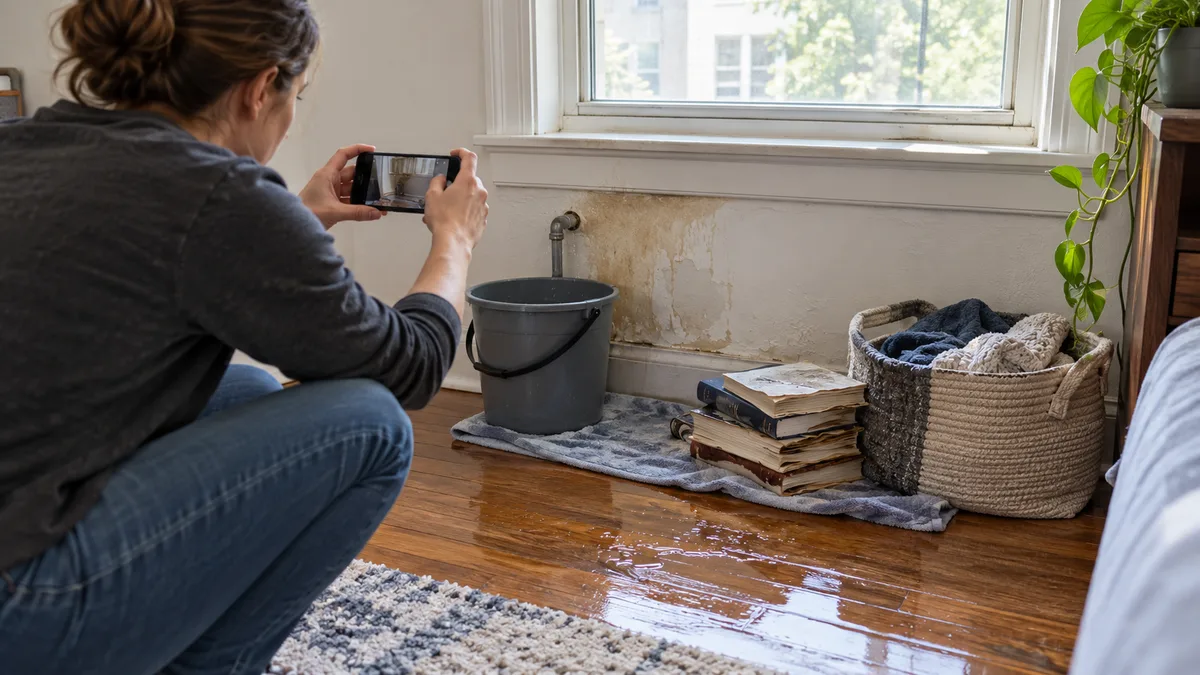
- Take photographs and videos of affected rooms and belongings.
- Create an inventory of damaged property with estimated values.
- Preserve receipts, purchase records and relevant communications.
- Contact the insurance company promptly.
- Follow reasonable instructions for preventing additional damage.
- Keep records of cleaning, temporary accommodation and related expenses.
Do not discard damaged items prematurely unless safety or sanitation requires it. Ask the insurer how to document items that cannot reasonably be preserved.
When Should You File a Claim?
Report potentially covered water damage as soon as practical, particularly when the loss is substantial or continuing. Policies may contain prompt-notice and cooperation requirements.
For minor damage, compare the estimated covered loss against the deductible before deciding whether to pursue payment. However, reporting requirements and the possibility of hidden damage should also be considered.
When unsure, ask the insurer or agent how the reporting process works and whether immediate notification is required.
How to Reduce Water Damage Risk in a Rental
Tenants can reduce the impact of water damage by reporting leaks early, protecting valuables and understanding their insurance exclusions. Prevention does not eliminate every accident, but it can limit damage and improve documentation.
Do not ignore dripping pipes, damp ceilings or unusual moisture around appliances. Notify the landlord in writing and retain a record of the report.
Keep important documents and sensitive electronics away from areas likely to experience leaks. Maintain an inventory of valuable belongings and review policy limits before a loss occurs.
Frequently Asked Questions
Does renters insurance cover water damage from a leaking ceiling?
It may cover damaged personal belongings if the ceiling leak results from an insured event. Coverage depends on the cause, such as a sudden plumbing failure or qualifying storm-related damage, and any applicable exclusions.
Does renters insurance cover a flooded apartment?
Standard renters insurance generally excludes natural flooding. A separate flood insurance policy may be necessary to protect personal belongings from external floodwater. Some internal water incidents may qualify under ordinary renters coverage.
Does renters insurance cover water damage to floors?
Renters insurance usually does not insure the landlord's building flooring as the tenant's personal property. Coverage for tenant-installed improvements or liability for damaged flooring depends on the specific policy and circumstances.
Will renters insurance pay for a hotel after water damage?
Additional living expenses coverage may pay eligible temporary housing costs if a covered loss makes the rental uninhabitable. The insurer must evaluate the incident and applicable limits. Excluded water damage may not qualify.
Is water backup coverage worth adding to renters insurance?
Water backup coverage may be useful if sewer or drain backups could damage valuable possessions. Compare the endorsement's premium, deductible, covered events and limits with the potential financial loss.
Final Takeaway
Renters insurance can cover water damage caused by many sudden and accidental incidents, but natural floods, sewer backups and gradual leaks often require different coverage or are excluded. The most reliable way to understand protection is to identify the cause of the damage and read the policy's relevant provisions.
Renters should review personal property limits, deductibles, water backup endorsements and additional living expenses coverage before a loss occurs. When damage happens, prompt documentation and communication can make the claims process more manageable.
Spotted an error? Tell our editors. Read our corrections policy.