How to Transport a Casserole Safely to a Holiday Dinner
Deciding how to transport a casserole starts with its temperature and the trip. Choose a hot or chilled plan before leaving for the potluck.
In this article
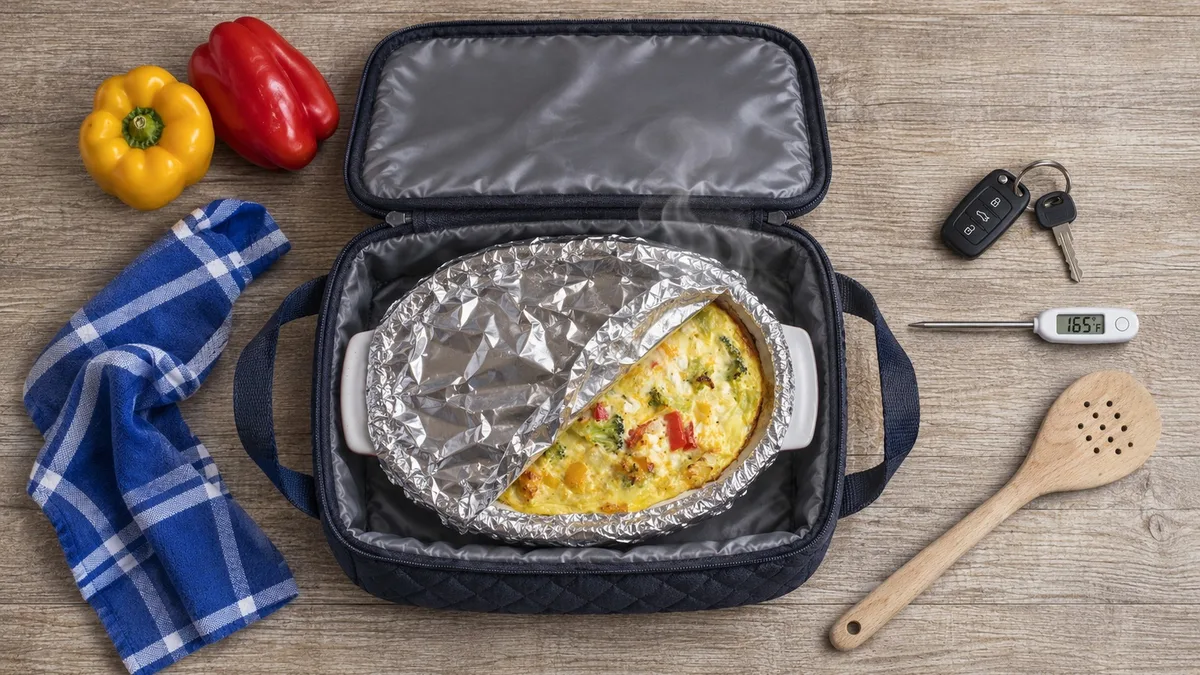
To transport a casserole safely, keep it hot at 140°F or above, or chill it and keep it at 40°F or below until reheating. Use a food thermometer to check the food, not a hand on the outside of the dish. For a long trip, uncertain traffic or a delayed meal, chilling the casserole and reheating it at the destination can be easier to manage than trying to keep it hot.
The right plan also depends on the host’s refrigerator and oven space. An insulated carrier slows temperature change, but its presence does not establish that the casserole stayed safe. Agree on the arrival and serving plan before you cook, especially for Thanksgiving or another gathering where the kitchen may already be full.
Choose a hot or chilled casserole transport plan
Choose hot transport only when you can maintain and verify safe hot holding; otherwise, plan to chill the casserole safely and carry it cold. FDA guidance uses 140°F or above for hot food and 40°F or below for cold food. Those limits apply to the food’s temperature, not the weather forecast or the vehicle’s thermostat.
Situation | Practical transport plan | What must be ready on arrival |
|---|---|---|
Short, predictable trip followed by prompt serving | A properly cooked casserole in a suitable insulated carrier, with temperature checks | Hot holding or immediate serving arrangements |
Longer drive or uncertain meal time | Safely chill, then transport in a cooler with adequate ice or frozen gel packs | Refrigerator space and a reheating plan |
Several stops before the dinner | Choose a plan that maintains safe temperature for the entire route | Storage until the actual meal time |
Host has no refrigeration or reheating space | Arrange another safe setup or bring a different item | A confirmed alternative, rather than an improvised warm counter |
There is no universal safe driving time for every casserole and carrier. The starting temperature, container, food quantity, insulation and conditions differ. Do not use a claimed “keeps food warm for hours” feature as a substitute for checking the temperature.
How to transport a casserole hot
Transport a hot casserole directly from safe cooking into a suitable covered, insulated carrier and maintain it at 140°F or above. FoodSafety.gov lists 165°F as the safe minimum internal temperature for meat and meatless casseroles. Check the casserole and leftovers temperature chart.
Use a clean food thermometer in appropriate parts of the dish, including the center, to check doneness. Close the lid or cover the pan securely, and place it in a carrier designed for hot cookware. Follow the container manufacturer’s directions, particularly for glass dishes and temperature changes.
Keep the dish upright and stable so it cannot slide, tip or spill into the vehicle. Protect the carrier’s interior and vehicle surfaces from the hot pan according to the product instructions. A covered dish that leaks during a sudden stop creates another problem besides losing heat.
Take a direct route and keep the carrier closed except when a temperature check is necessary. Check the food again on arrival. Move it to serving or verified hot holding rather than leaving it on the counter while the host finishes other dishes.
How to transport a casserole chilled
Chill the cooked casserole safely before loading it into a cooler, then keep it at 40°F or below during transport. Do not put a large, steaming casserole into an ordinary cooler and expect ice packs to function as a rapid-chilling system. Prepare early enough for safe cooling and refrigerated storage.
The USDA leftovers guidance recommends dividing large quantities into smaller portions and using shallow containers for faster cooling. Refrigerate promptly rather than leaving the dish at room temperature until it feels cool. A large amount may need to be portioned for cooling and later reheated in an appropriate serving dish.
Once chilled, pack the covered food with enough ice or frozen gel packs to keep it cold. Keep it separate from raw meat and protect it from leaking packages. An appliance thermometer in the cooler can help monitor the cooler, while a clean food thermometer checks the casserole itself.
Ask the host to clear refrigerator space before you arrive. If the meal is not starting immediately, put the food into refrigeration or continue verified cold holding. A cool outdoor temperature does not make a porch, trunk or garage equivalent to a controlled refrigerator.
Reheat before hot holding at the destination
Reheat a chilled casserole to 165°F, then hold it at 140°F or above if it will not be served immediately. The University of Wisconsin Extension transport guidance makes that distinction between reheating and keeping food warm. Warming equipment should not be assumed to reheat a large cold dish safely.
Arrange an oven or other suitable reheating method with the host. Check several locations with the thermometer so a hot edge does not conceal a cold center. If using a microwave, follow the appliance and recipe instructions for covering, rotating or stirring and standing time, then check the food temperature.
Do not promise a universal number of oven minutes. A deep casserole, several smaller portions and a shallow pan can heat differently. The thermometer result is the check that matters.
Count waiting time as well as driving time
Safe casserole transport includes packing, loading, stops and waiting at the destination, not just the time shown by the navigation app. Perishable food should not spend more than two hours without safe temperature control, or more than one hour when temperatures exceed 90°F. FDA explains the time and temperature limits.
For a conservative hypothetical plan, suppose you set a casserole out at 11:00 a.m., take 20 minutes to pack the car, drive for 50 minutes and then leave it on the host’s counter for 70 minutes. Without verified safe holding, that is 140 minutes of uncontrolled time, not just a 50-minute trip. The plan exceeds two hours and should be changed before leaving home.
Keep food refrigerated or safely hot while completing other preparations, then load it near departure. On arrival, move it promptly into the agreed holding or reheating setup. Refrigerating food later does not erase unsafe time it already spent without temperature control.
If the casserole exceeded the safe time limits, discard it. Reheating does not make every improperly handled food safe again. When the time and temperature history cannot be established, do not rely on smell or appearance to serve it to guests.
Pack for serving and leftovers, too
Bring a thermometer, clean serving utensil, secure lid and containers for leftovers when transporting a casserole to a shared meal. Tell the host whether it arrives hot for immediate holding or chilled for reheating. Label the dish and provide ingredient information when guests need to identify allergens; that does not replace their own precautions.
Plan where leftovers will go before the serving dish sits out too long. Refrigerate suitable leftovers promptly in shallow containers and use USDA storage guidance. If sauce is being saved separately, Eagle Post Daily’s guide to freezing leftover gravy covers its storage and reheating considerations.
Transporting a casserole safely is a complete chain: cook correctly, maintain the chosen temperature, verify it on arrival, then serve or store promptly. If one link in that chain is missing, change the plan rather than depending on a better-looking carrier.
FAQ
These questions address common problems when deciding how to transport a casserole.
Is an insulated bag enough for a two-hour drive?
Not by itself. Verify that the food stays at the appropriate hot or cold holding temperature throughout the plan. The two-hour limit is not a guarantee that every bag will keep a casserole hot for that length of time.
Can you put a hot casserole in the refrigerator?
Small amounts of hot food can go directly into the refrigerator, according to USDA guidance. Divide large quantities into smaller portions in shallow containers for faster cooling. Do not leave a large dish on the counter for hours to cool first.
Can you transport an uncooked casserole and bake it there?
Yes, if the ingredients are handled safely, kept at 40°F or below as required during transport, and cooked properly at the destination. Confirm the host’s oven capacity and timing in advance. Avoid partial cooking followed by an uncontrolled trip; choose a fully planned cold or safely cooked transport method.
Фото на обкладинці: User:MarkTraceur / Wikimedia Commons, CC BY-SA 1.0, змінено
Spotted an error? Tell our editors. Read our corrections policy.