FTC Adds Five States to Hims & Hers Privacy and Billing Lawsuit
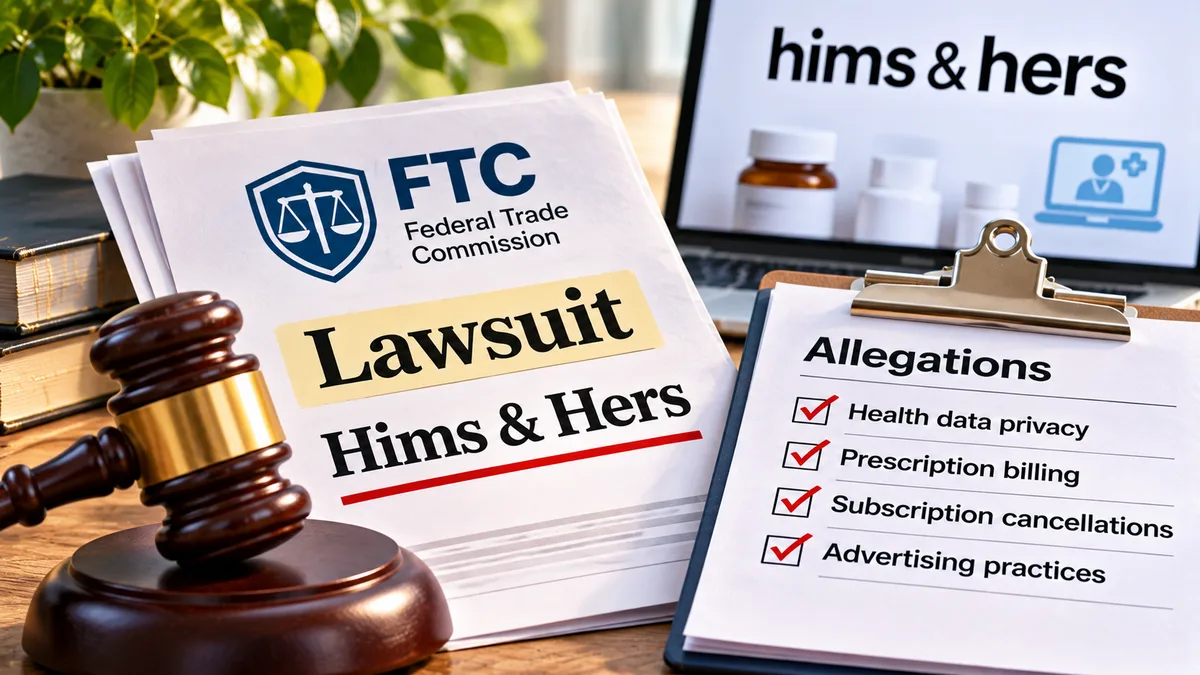
The FTC's case against telehealth provider Hims & Hers has expanded to include five additional states. The amended lawsuit raises allegations about health data, advertising technology, prescription billing and subscription cancellations.
In this article
- What Changed in the Hims & Hers Lawsuit on November 10?
- When Did the FTC First Sue Hims & Hers?
- What Does the FTC Allege About Health Data Privacy?
- Which Types of Health Information Are Involved?
- What Does the FTC Allege About Prescription Charges?
- What Does the FTC Allege About Subscription Cancellations?
- How Has Hims & Hers Responded?
- What Should Current Hims & Hers Customers Check?
- How Can Consumers Review Their Subscription Charges?
- What if a Customer Is Concerned About Health Data Privacy?
- Is There a Hims & Hers Refund or Settlement Program?
- How Is This Different From a Data Breach?
- What Happens Next in the FTC Case?
- Frequently Asked Questions
- The Bottom Line
The FTC lawsuit against Hims & Hers expanded on November 10, 2026, when five additional states joined the federal agency's case alleging deceptive privacy, billing, and subscription practices. The new state plaintiffs are Arizona, Florida, Nebraska, Ohio, and Wisconsin.
The amended complaint alleges that the telehealth company shared sensitive consumer health information with third-party advertising platforms despite representations about protecting users' privacy. It also challenges how the company allegedly disclosed prescription charges and handled subscription cancellations.
These remain allegations in pending litigation. The court has not entered a final judgment establishing that Hims & Hers committed the alleged violations. The company has disputed the government's claims and said it intends to defend itself.
What Changed in the Hims & Hers Lawsuit on November 10?
Five states joined the case through an amended complaint filed in the U.S. District Court for the Northern District of California. The federal case already included the FTC, Utah, and California acting through Los Angeles County Counsel.
The newly added states bring further claims under their respective consumer protection laws. The amended filing also continues to address alleged violations of federal law, including the FTC Act and the Restore Online Shoppers' Confidence Act.
Case detail | Confirmed information |
Date of latest FTC announcement | November 10, 2026 |
Defendant | Hims & Hers Health, Inc. |
Federal agency | Federal Trade Commission |
New state plaintiffs | Arizona, Florida, Nebraska, Ohio, Wisconsin |
Previous government partners | Utah and California, through Los Angeles County Counsel |
Court | U.S. District Court, Northern District of California |
Civil action | 3:26-cv-07871-VC |
Current status | Pending litigation |
Main allegations | Health data privacy, billing disclosures, subscription cancellation practices |
The FTC's commission vote authorizing the amended complaint was 2-0. The addition of state plaintiffs does not itself establish liability or create a refund program.
When Did the FTC First Sue Hims & Hers?
The lawsuit began before November 2026. The FTC's official case history identifies an initial complaint filed on July 29, 2026, followed by another complaint filing on August 31 and the first amended complaint on November 10.
That distinction is important because the latest development is an expansion of an existing case, not a newly discovered incident or the first accusation made against the company.
Date | Development |
July 29, 2026 | Initial FTC complaint filed |
August 31, 2026 | Additional complaint filing |
November 10, 2026 | First amended complaint adds five states |
November 12, 2026 | Litigation remains pending as of this report |
A future court order, dismissal, settlement, or other development could change the legal status. Readers should review official case records for subsequent updates.
What Does the FTC Allege About Health Data Privacy?
The FTC alleges that Hims & Hers disclosed sensitive health information to third-party advertising platforms despite representations that its services protected consumer privacy. According to the agency, the alleged practices involved technologies and data transfers connected to users' health-related interactions with the service.
The complaint describes data sharing involving platforms including Meta and Snap. It also addresses tracking technologies used in the company's online environment.
These allegations raise questions about how health-related details supplied through telehealth websites can be used or transmitted to advertising systems.
What Are Advertising Pixels?
Advertising pixels and related tracking technologies can record certain website activities and send information to outside services. Depending on configuration, they may transmit events such as account registrations, purchases, or other user interactions.
Such technologies are widely used in digital advertising, but their use can raise privacy concerns when sensitive personal information is included or transferred without appropriate disclosures and legal authorization.
The FTC alleges that the tracking and data-sharing practices at issue conflicted with representations made to Hims & Hers users. Whether those allegations are legally established remains for the court to decide.
Which Types of Health Information Are Involved?
The amended complaint addresses sensitive information associated with medical conditions and health-related consumer activity. Details in such records can be particularly sensitive because they may reveal why a person sought treatment or which products or services they considered.
Hims & Hers provides telehealth services in several treatment areas, including weight management, sexual health, hair loss, and mental health. The complaint's allegations concern privacy practices rather than a general determination that every medical service offered by the company is unsafe.
It is important not to infer that every user had the same information shared or that all forms of health data were necessarily involved in identical ways.
What Does the FTC Allege About Prescription Charges?
The FTC alleges that Hims & Hers failed to disclose clearly that consumers could be charged for prescription products shortly after completing an intake form, despite descriptions of the opportunity to consult a provider about appropriate treatment.
This raises an issue about the timing and clarity of consent to a purchase. A customer may understand an intake questionnaire as the beginning of a medical evaluation, while the service may also include a payment or subscription commitment.
The legal question concerns whether consumers received truthful and sufficiently clear information about the nature and timing of charges. The allegations do not establish that every charged prescription was medically inappropriate or that all purchases were unauthorized.
What Does the FTC Allege About Subscription Cancellations?
The complaint also challenges the company's subscription cancellation practices. According to the FTC, consumers allegedly encountered obstacles when attempting to cancel recurring services.
Negative-option subscriptions typically involve charges that continue unless the consumer takes action to stop the arrangement. Federal consumer protection rules can require clear disclosures, appropriate consent, and lawful cancellation practices.
The FTC alleges that certain practices used by Hims & Hers were deceptive or otherwise unlawful. The company disputes the allegations, and the court has not reached a final determination.
How Has Hims & Hers Responded?
Hims & Hers has rejected the claims and indicated that it will vigorously defend itself. A company spokesperson characterized the new state claims as relying on allegations that the company considers flawed.
The dispute therefore involves opposing positions. The FTC and state plaintiffs are asking the court to address alleged consumer protection violations, while the defendant contests the government's account.
Reporting should accurately distinguish the allegations in the complaint, the company's response, and any later judicial findings.
What Should Current Hims & Hers Customers Check?
The expanded lawsuit does not mean that customers automatically need to discontinue treatment or cancel subscriptions. However, consumers may want to review their accounts, billing history, privacy settings, and service agreements.
Practical checks include:
- Review the account's current subscription status and renewal terms.
- Examine recent charges and identify unfamiliar or disputed amounts.
- Read the privacy policy and applicable data-sharing settings.
- Save receipts, cancellation confirmations, and customer service correspondence.
- Contact the company to resolve billing or subscription questions.
- Escalate unresolved consumer protection concerns through appropriate channels.
Medical treatment decisions should be made with a qualified healthcare professional, particularly when prescriptions are involved. A consumer protection lawsuit is not itself medical advice.
How Can Consumers Review Their Subscription Charges?
The most useful starting point is the account's billing history and the underlying payment records. Compare transaction dates, renewal schedules, prescription orders, and any cancellation requests.
If a charge appears inconsistent with the agreed terms, request an explanation from the company and preserve the response. A credit card dispute may be appropriate in certain circumstances, but consumers should understand the card issuer's procedures and applicable deadlines.
Canceling a subscription does not necessarily reverse past charges or establish that a refund is due. Any refund rights depend on the agreement, circumstances, and applicable law.
What if a Customer Is Concerned About Health Data Privacy?
Consumers can review their account privacy choices, request information from the provider about available controls, and consider whether connected advertising or marketing preferences can be changed.
The existence of the lawsuit does not prove that a specific person's data was disclosed. It is therefore more accurate to describe the alleged practices than to state that all customers' medical records have been exposed.
Anyone who believes their information was improperly handled may consider submitting a complaint to the FTC or a relevant state consumer protection authority.
Is There a Hims & Hers Refund or Settlement Program?
As of the November 10 announcement, the matter remains pending litigation. The FTC has not announced a finalized consumer refund distribution program arising from this amended complaint.
Consumers should be wary of messages that claim to provide guaranteed lawsuit compensation in exchange for an upfront fee, banking credentials, or sensitive identity information.
Any future settlement or official refund process should be verified through authoritative court or government sources.
How Is This Different From a Data Breach?
A privacy-practices lawsuit is not necessarily the same as a security breach involving unauthorized access by hackers. The FTC's allegations concern data sharing and representations made to consumers, which raise different legal questions.
A company can face scrutiny over how information is collected, used, or disclosed even when no external attacker has compromised its systems.
Readers should avoid treating an alleged advertising-data disclosure as proof of a conventional cyberattack.
What Happens Next in the FTC Case?
The court will determine the next steps under federal civil procedure, including responses to the amended complaint, possible motions, discovery, and other proceedings.
The existence of an amended complaint does not guarantee a trial, settlement, damages award, or particular remedy. Cases may evolve through further litigation or negotiated resolution.
The FTC's official case page provides the best reference point for tracking publicly released procedural documents.
Frequently Asked Questions
Did five states join the FTC lawsuit against Hims & Hers?
Yes. Arizona, Florida, Nebraska, Ohio, and Wisconsin were added as co-plaintiffs in the amended complaint announced November 10, 2026.
Has Hims & Hers been found guilty?
No final judgment establishing the alleged civil consumer protection violations has been announced in this case as of this report. The allegations remain disputed.
Is the lawsuit about GLP-1 medication safety?
The described FTC case focuses on alleged privacy, billing, and cancellation practices. It is not itself an FDA drug safety determination.
Does every customer qualify for a refund?
No automatic refund eligibility or finalized compensation program has been announced through this amended complaint.
Should customers stop taking prescribed medication?
A legal dispute over consumer practices is not a reason to independently stop prescribed treatment. Medication questions should be discussed with an appropriate healthcare professional.
The Bottom Line
The November 10, 2026 expansion of the FTC lawsuit adds five states and new state-law claims to an existing case involving Hims & Hers. The allegations concern sensitive health data, advertising technology, billing disclosures, and cancellation procedures.
For consumers, the practical response is to review account records and preserve evidence of disputed transactions. For readers following the case, the central distinction is that an amended complaint is an allegation—not a final court ruling.
Spotted an error? Tell our editors. Read our corrections policy.