Does Holiday Pay Count Toward Overtime? How to Check Your Paycheck
Holiday pay for time off generally does not count toward federal overtime. Hours you actually work on a holiday count the same way as hours worked on any other day. Under the Fair Labor Standards Act...
This article is general information, not financial advice. Rates, prices and rules change; check the details with a qualified professional or the lender before you decide.
In this article
Holiday pay for time off generally does not count toward federal overtime. Hours you actually work on a holiday count the same way as hours worked on any other day. Under the Fair Labor Standards Act (FLSA), covered, nonexempt employees generally earn overtime at 1.5 times their regular rate for hours worked beyond 40 in a workweek. Your pay stub can show more than 40 paid hours even when your timecard shows 40 or fewer hours worked. U.S. Department of Labor regular-rate guidance
How to tell whether your holiday hours count toward overtime
Count time you worked, including a holiday shift, separately from paid time off. A line called “Holiday” on your pay stub could represent pay for a day off or a premium for working a holiday. Match that entry to your timecard before deciding how many hours count.
What happened in one workweek | Hours worked for federal overtime | Federal weekly overtime hours |
|---|---|---|
You worked 32 hours and received 8 hours of holiday pay for a day off. | 32 | 0 |
You worked 40 hours and received 8 hours of holiday pay for a day off. | 40 | 0 |
You worked 36 hours on other days and 8 hours on the holiday. | 44 | 4 |
You worked 42 hours and separately received 8 hours of holiday pay for a day off. | 42 | 2 |
Apply the table to your employer’s established workweek. A two-week paycheck might show 80 hours worked because you worked 44 hours in one week and 36 in the next. The shorter week does not cancel the four federal overtime hours in the longer week. State law or an agreement may provide additional pay. Federal workweek rule, 29 CFR § 778.104
What holiday pay and overtime can look like in dollars
At a flat $20 hourly rate with no other compensation affecting the regular rate, 40 hours worked plus eight paid holiday hours off comes to $960 before taxes and deductions. That’s $800 for work and $160 for the paid day off, with zero federal overtime hours. With 42 hours worked and the same paid day off, gross pay is $1,020. That’s $800 for the first 40 hours, $60 for two overtime hours at $30, and $160 in holiday pay.
Some payroll systems show all 42 worked hours at $20 and add a separate $20 overtime premium for the two extra hours. That display produces the same $1,020 total once the $160 holiday payment is added. In either display, any additional pay that must be included in the regular rate, such as a qualifying nondiscretionary bonus, can change the overtime calculation. U.S. Department of Labor regular-rate guidance
Does a premium for working a holiday change overtime pay?
A qualifying holiday premium can offset part or all of the federal overtime premium owed for that same workweek. To qualify under the federal rule for holiday work, the premium rate must be at least 1.5 times the rate set in good faith for comparable work on non-overtime days. The extra portion may be excluded from the regular-rate calculation and credited toward federal overtime. The hours actually worked on the holiday still count. A company policy, union contract, or applicable state law can affect what the employer owes beyond the federal rule. U.S. Department of Labor holiday-premium guidance
For example, assume your base rate is $20, you work 44 hours, and eight of those hours are paid at a qualifying holiday rate of $30. The extra holiday premium is $80, or $10 for each of those eight hours. The federal overtime premium on four hours is $40 under these assumptions. If the employer applies the permitted credit, the holiday premium covers the $40 federal obligation. Ask payroll which premium was paid and whether a credit was applied if your pay stub leaves that unclear.
How to check holiday pay and overtime on your pay stub
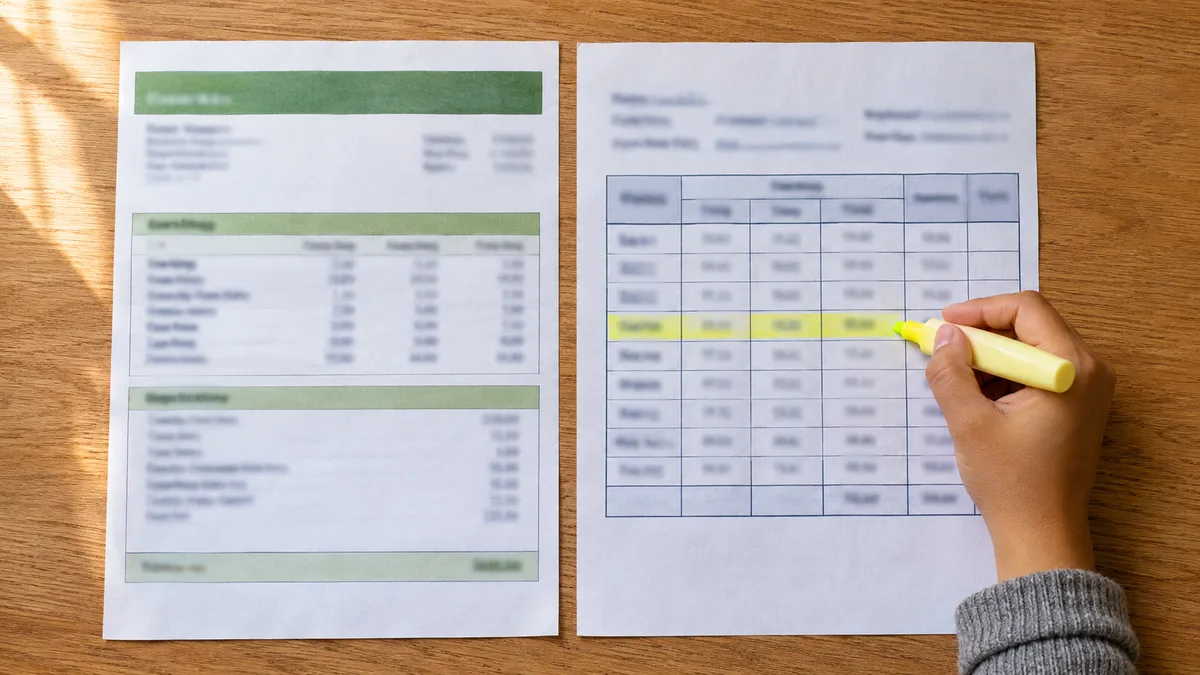
Use the timecard and pay stub together. Write down your actual hours by workweek, highlight paid holiday time you took off, and look for a separate line for extra pay on a holiday shift. If the totals still seem wrong, ask payroll to explain the workweek dates, hours worked, regular rate used, and any holiday premium credit.
State overtime can matter even when federal weekly overtime is zero. In California, for example, daily overtime generally applies after eight hours in a workday for covered nonexempt employees, subject to exceptions. California’s labor department also explains that paid holiday time off generally does not count as work for state overtime. If payroll can’t resolve a discrepancy, save your timecards and pay stubs and contact your state labor agency or the U.S. Department of Labor’s Wage and Hour Division. California holiday rules
FAQ
Is working on Thanksgiving automatically time and a half?
Federal law does not require time and a half solely because you work on Thanksgiving. The hours count toward federal overtime, and a separate holiday premium may be owed under an applicable policy, agreement, or law. U.S. Department of Labor holiday-pay guidance
Can my employer count paid holidays toward overtime anyway?
An employer can provide a more generous overtime benefit, including through a collective bargaining agreement or written policy. Check the policy for how it treats a paid holiday and whether it describes a separate company benefit. For a related question about paid time off when leaving a job, see the PTO payout guide.
Spotted an error? Tell our editors. Read our corrections policy.