Toilet Leak Test: Find a Silent Leak Before Your Water Bill Rises
A toilet leak test can reveal wasted water even when the bathroom floor is dry. Check the tank-to-bowl path before assuming a higher water bill is unavoidable.
This article is general information, not financial advice. Rates, prices and rules change; check the details with a qualified professional or the lender before you decide.
In this article
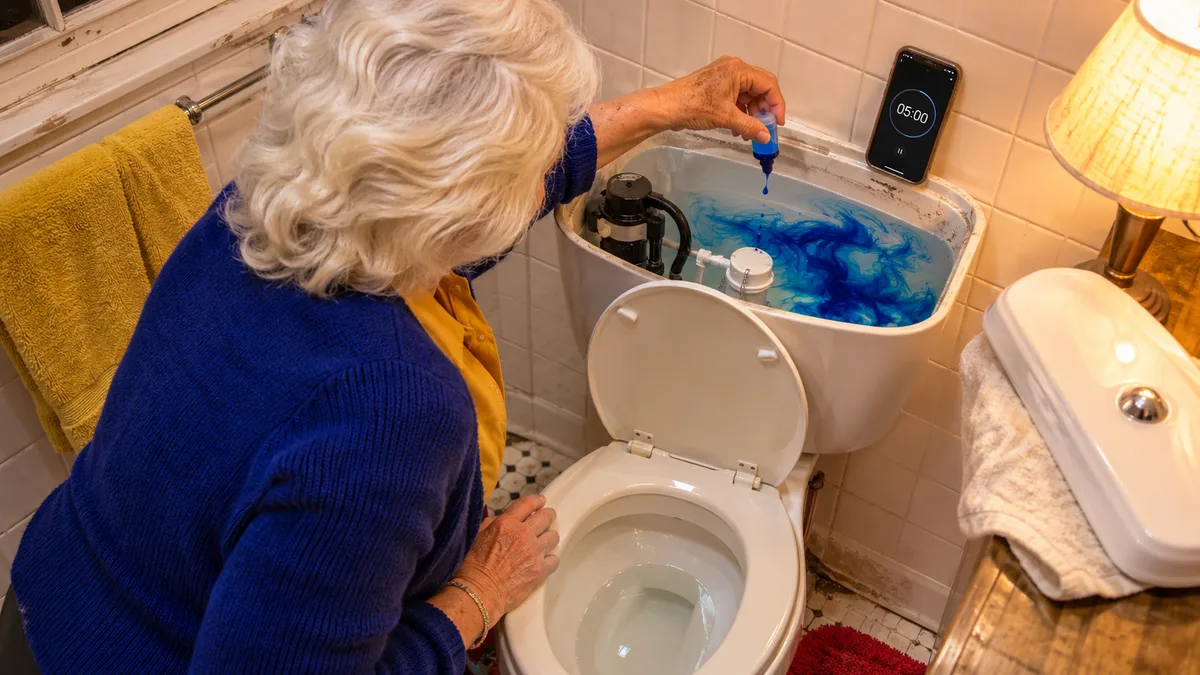
A toilet leak test uses a few drops of food coloring in the tank to reveal water escaping into the bowl without a flush. Wait 10 minutes; if color appears in the bowl, the tank is leaking into it. Flush immediately afterward to help prevent staining, following the EPA's WaterSense test instructions.
This simple check is for a conventional toilet with an accessible water tank. A dry floor does not rule out this internal leak, and a toilet that sounds quiet can still deserve a test. A visible leak onto the floor, an overflowing toilet or a loose fixture needs attention beyond the dye check.
How to do the 10-minute toilet leak test
Put the color in the tank, avoid flushing during the waiting period and look for it in the bowl after 10 minutes. Keep the starting bowl water clear so the result is easy to recognize. The EPA also describes dye tablets as an option in its home-maintenance guidance.
- Identify the tank and check the manufacturer's instructions if the toilet has an unusual design or cleaning system.
- Carefully lift the tank lid and place it on a stable surface where it cannot fall or crack.
- Add a few drops of food coloring or a suitable test tablet to the tank water.
- Leave the toilet unused for 10 minutes. Let other household members know not to flush it.
- Look in the bowl for color, record the result and flush immediately after the experiment.
Do not pour color into the bowl and then treat the colored water as proof of a leak. The point is to find out whether water travels from the tank into the bowl when no flush occurs. If someone flushes during the wait, start a new test with clear bowl water.
Avoid forcing a heavy or unfamiliar lid or opening a concealed tank without the appropriate instructions. Renters can ask maintenance staff to perform the test if access is awkward. This procedure identifies a symptom; it does not require taking the valve assembly apart.
What does the result tell you?
Color moving into the bowl indicates an internal tank-to-bowl leak, while a clear bowl means that this particular test did not reveal one at that time. A toilet leak test does not identify every possible plumbing leak or certify that the fixture is problem-free.
What you observe | What to do next |
|---|---|
Color appears without flushing | Record the result and arrange a model-appropriate inspection or repair |
Bowl remains clear | Check for intermittent running, visible moisture and other sources of higher water use |
Someone flushed during the wait | Repeat the test under controlled conditions |
Water is on the floor or the toilet overflows | Address the active water problem; do not wait for the dye test |
EPA identifies worn toilet flappers as a common source of leaks. However, buying a flapper before identifying the toilet's actual mechanism can mean buying the wrong part. Photograph the model information and the tank components without dismantling them, then use the manufacturer or a plumber to identify the relevant replacement.
If the toilet refills intermittently, note when it happens and whether the dye test was positive. A brief phone recording can help maintenance staff understand an intermittent sound. Do not interpret the absence of noise during one test as proof that an earlier problem was imaginary.
Use a water-meter check to look beyond the toilet
A no-use meter check can indicate water use somewhere in the property, but it does not prove that the toilet is responsible. EPA recommends comparing the meter before and after a two-hour period when no water is being used. Combine that information with a toilet leak test rather than treating either test as a complete diagnosis.
Choose a period when household members will not run faucets, flush toilets or use water-consuming appliances. Account for automatic systems that may operate during the interval, such as irrigation or appliance cycles. Record the reading, its units, the start time and the ending reading.
If the meter changes, investigate the source or ask the water utility or a plumber for help. If your home shares a meter with other units, you may not be able to create a true no-use interval yourself. Ask the property manager how consumption is measured before assigning the change to your apartment.
The meter and dye checks answer different questions. A positive dye result points to the toilet's internal water path; meter movement can include other fixtures or automatic equipment. That distinction helps avoid repairing one toilet and assuming every unexplained gallon has been accounted for.
Estimate the bill impact using your own readings
Estimate potential cost from a measured water-use rate and the utility's applicable usage charges, not a universal claim that every leaking toilet wastes the same amount. A toilet leak test identifies a leak; it does not measure its flow rate. A projection from the meter is only useful after other water use has been controlled.
Suppose a hypothetical isolated leak accounts for 1.5 gallons over a two-hour test:
- Estimated rate: 1.5 gallons divided by 2 hours = 0.75 gallon per hour.
- If that rate continued unchanged: 0.75 x 24 x 30 = 540 gallons over 30 days.
- At an invented combined usage rate of $8 per 1,000 gallons: 540 divided by 1,000 x $8 = $4.32.
These are example inputs, not an average leak, a local rate or a promise of savings. An intermittent leak may not continue at the measured rate. A bill using tiered prices, different sewer calculations or another measurement unit needs a different calculation.
Read the bill's unit definitions and separate usage charges from fixed fees. For one local example, Austin Water's high-bill guide explains that its tiered usage pricing can change the cost of wasted water. Your utility's rates and rules may differ. Ask the utility whether it offers any leak-adjustment process, what documentation it requires and whether your situation qualifies. Do not budget around a credit until the utility confirms it.
Turn the test into a useful repair request
A clear record of the toilet leak test helps a landlord, maintenance worker or plumber decide what to inspect. Include the fixture location, test date, result, refill symptoms and any photos. Add meter readings only if the test conditions and units are known.
After an appropriate repair, repeat the dye check and confirm that the original symptom has stopped. Compare later usage over a meaningful period while allowing for household changes. A repaired internal leak does not rule out a separate leak elsewhere.
For a rental, report the finding promptly through the normal maintenance channel and keep the record. For an owned home, follow the manufacturer's part and service instructions. If water is escaping outside the fixture or a valve cannot be operated safely, get appropriate help instead of forcing it.
FAQ
These answers explain what a toilet leak test can and cannot establish.
Does the floor need to be wet for the toilet to leak?
No. Water can pass from the tank into the bowl without appearing on the floor. That is the hidden path the dye test checks.
Does a positive result prove the flapper is the only problem?
No. It shows water moving into the bowl, not a complete diagnosis of the mechanism. Identify the toilet model and inspect the relevant components before purchasing parts.
What if the test is negative but the water bill is still high?
Review the billing period, meter units, household use and other possible leaks. Repeat a toilet leak test if symptoms are intermittent, and use utility or plumbing help when the source remains unclear.
Spotted an error? Tell our editors. Read our corrections policy.