Portable Generator Won't Start in Cold Weather? What to Check First
A portable generator may fail to start after freezing temperatures or long storage. Learn which basic problems to check first, which repairs require a technician, and why generator placement is a critical safety issue.
This article is general information, not financial advice. Rates, prices and rules change; check the details with a qualified professional or the lender before you decide.
In this article
- Why Won't a Generator Start When It's Cold?
- Portable Generator Troubleshooting Chart
- Check the Fuel Before Replacing Parts
- What Does the Choke Do in Cold Weather?
- Can Low Oil Stop a Generator From Starting?
- Why a Generator's Electric Starter Fails in Winter
- Could the Spark Plug Be the Problem?
- What if the Generator Starts and Immediately Dies?
- Safe Generator Placement During Cold Weather
- Can You Warm a Generator Before Starting It?
- How to Prepare a Generator Before Winter
- Generator Maintenance Checklist
- When Should You Stop Troubleshooting?
- Frequently Asked Questions
- The Bottom Line
When a portable generator won't start in cold weather, common causes include stale gasoline, insufficient oil, incorrect choke settings, weak starter batteries, and ignition or fuel-system problems. Low temperatures can make existing maintenance issues more noticeable and may affect how easily an engine starts.
A generator that has been stored for months may have more than one problem. Old fuel can cause carburetor trouble, while low battery charge can prevent electric starting. The correct troubleshooting sequence depends on whether the engine cranks, fails to crank, briefly starts and stalls, or runs without producing electricity.
Critical safety rule: Never start or operate a portable fuel-powered generator inside a house, garage, basement, shed, or other enclosed or partially enclosed area. Carbon monoxide in generator exhaust can be deadly, even when doors and windows are open.
Why Won't a Generator Start When It's Cold?
Cold weather can make a small gasoline engine harder to start by affecting battery performance, fuel vaporization, oil viscosity, and starting conditions. However, freezing temperatures do not automatically mean the engine is damaged.
Generac identifies fuel supply, oil level, choke position, spark plugs, air filters, and engine switches among the common starting checks for its portable generators. The exact instructions vary by model, so the owner's manual takes priority.
An effective diagnosis begins by observing how the generator behaves when starting is attempted.
Portable Generator Troubleshooting Chart
Symptom | Possible causes | First safe check |
Starter does nothing | Weak starter battery, switch setting, connection problem | Confirm starting controls and battery condition |
Starter cranks but engine will not start | Fuel, choke, ignition, or fuel-system issue | Check fresh fuel and prescribed starting sequence |
Engine starts then stalls | Stale fuel, clogged carburetor, oil-related shutdown | Check fuel condition and oil level |
Pull cord is difficult to move | Mechanical resistance or engine issue | Stop and consult manual or qualified technician |
Generator runs but produces no power | Output breaker, GFCI, outlet, or internal electrical issue | Check supported output controls with loads disconnected |
Starts in warm weather but not freezing weather | Cold battery, fuel vaporization, oil or starting procedure | Review cold-weather instructions |
A generator that repeatedly stalls, leaks fuel, emits unusual smoke, or produces abnormal mechanical noises should not be forced to continue operating.
Check the Fuel Before Replacing Parts
Old gasoline is a common cause of portable generator starting problems after storage. Fuel can deteriorate, and some fuel components may contribute to deposits that interfere with carburetor operation.
A generator that has sat unused since the previous winter should not be assumed to contain suitable fuel. Review the manufacturer's storage instructions, including whether a fuel stabilizer was used.
Generac advises checking that its applicable gasoline generators have clean, fresh fuel and that the fuel shutoff valve is correctly positioned. The company also identifies extended storage without appropriate treatment as a possible cause of carburetor problems.
If fuel is visibly contaminated or a leak is suspected, stop troubleshooting and follow approved service procedures.
What Does the Choke Do in Cold Weather?
The choke helps certain gasoline engines start when they are cold by changing the air-fuel mixture during startup. Using the wrong position can make an otherwise functional engine difficult to start.
On many applicable portable generators, a cold engine requires a starting position different from that used after the engine is already warm. Some models have automatic choke systems rather than a manually operated control.
Use the exact starting sequence specified for the generator. Repeatedly operating the choke without following the instructions may flood the engine and make starting more difficult.
Can Low Oil Stop a Generator From Starting?
Many portable generators include a low-oil shutdown system designed to prevent damage when the oil level is insufficient. A generator may refuse to start or stop shortly after starting when the system detects a condition requiring shutdown.
Place the generator on level ground, allow the engine to cool, and check the oil using the manufacturer's procedure.
Use only the oil grade and specification approved for the model and ambient temperature. Adding excessive oil is not a solution and can create additional problems.
Why a Generator's Electric Starter Fails in Winter
Cold weather reduces the performance of many starter batteries, especially those that have aged or remained discharged during storage. A weak battery may produce a click, crank the engine slowly, or fail to operate the starter.
Check accessible battery connections for visible corrosion or loose terminals, following the manufacturer's precautions. If the model supports charging its starter battery externally, use a compatible approved charger.
Some generators offer both electric and recoil starting. A model that starts using the recoil system but not the electric starter may need battery or starter-circuit attention.
Never bridge starter terminals or improvise electrical connections.
Could the Spark Plug Be the Problem?
A damaged, fouled, or incorrectly connected spark plug can prevent ignition. The spark plug and its lead should be inspected only under the precautions described in the owner's manual.
A visible spark plug problem may justify replacement with an approved component. However, the absence of starting after replacing a plug does not prove that the carburetor must be replaced.
If troubleshooting requires testing live ignition components, disassembling fuel systems, or bypassing safety controls, a qualified service technician is the safer choice.
What if the Generator Starts and Immediately Dies?
A generator that starts briefly and stalls may have a fuel-delivery problem, stale gasoline, incorrect choke position, insufficient oil, or another mechanical issue.
Start by checking the basic operating conditions rather than repeatedly restarting the engine. Record whether it stalls after a few seconds, when the choke changes position, or when an electrical load is connected.
A generator that stalls only when appliances are plugged in may have an overload or output problem rather than a starting problem. Disconnect loads and review the manufacturer-approved diagnosis.
Safe Generator Placement During Cold Weather
A portable generator must be operated outdoors, far from occupied buildings. The U.S. Consumer Product Safety Commission advises keeping generators at least 20 feet away from the house, with exhaust pointed away from windows, doors, and vents.
A garage with the main door open is not a safe operating location. Carbon monoxide can accumulate rapidly or enter the home through openings and ventilation paths.
Use battery-operated or battery-backup carbon monoxide alarms in the home. If an alarm sounds or carbon monoxide exposure is suspected, leave the area immediately and seek emergency assistance.
Never attempt to warm a running generator indoors.
Can You Warm a Generator Before Starting It?
Some manufacturers provide model-specific guidance for warming a cold generator before attempting startup. Any warming procedure must avoid creating an exhaust, fire, or fuel-vapor hazard.
For example, Generac describes moving an appropriate, switched-off generator to a warmer storage environment before startup under certain cold conditions. The unit must then be moved to a safe outdoor operating location before the engine is started.
Do not use open flames, unauthorized electric heaters, heat guns, or other improvised heating methods around gasoline or fuel systems.
How to Prepare a Generator Before Winter
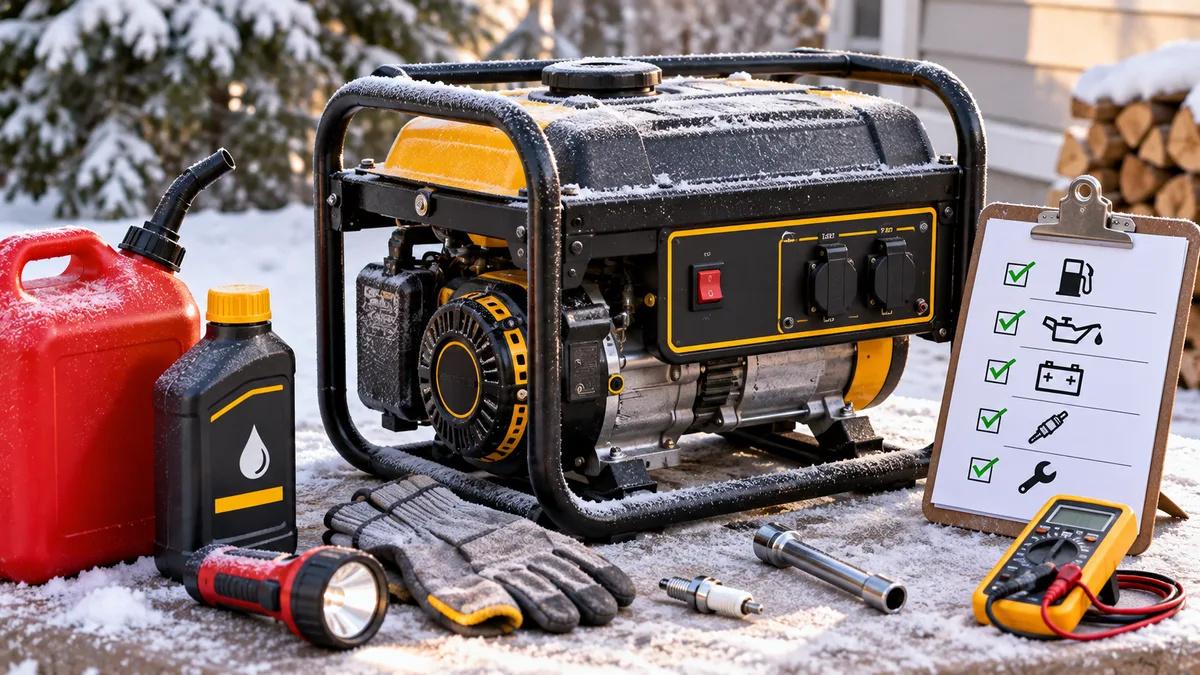
Preventive maintenance is usually more reliable than troubleshooting during an outage. A practical winter preparation program includes reviewing the manual, checking oil and fuel condition, inspecting the starter battery, and testing the unit outdoors under appropriate conditions.
Perform only the maintenance approved for the model. Keep fuel stored in suitable containers according to applicable safety rules, and follow the manufacturer's instructions for stabilizing or draining gasoline during longer storage periods.
A generator should also be tested under supported loads in a safe setting before an emergency, rather than left unused until the power fails.
Generator Maintenance Checklist
Item | Why it matters |
Fresh, approved fuel | Supports reliable combustion |
Correct oil level and specification | Helps protect the engine |
Starter battery | Supports electric starting |
Air filter | Maintains proper airflow |
Spark plug | Supports ignition |
Choke and fuel valve | Must match starting procedure |
Carbon monoxide alarms | Warn of dangerous indoor CO concentrations |
Safe outdoor location | Reduces exhaust exposure risk |
Approved power connections | Reduces electrical hazards |
Manufacturer maintenance schedule | Prevents avoidable failures |
A generator should not be directly connected to household wiring without appropriately installed transfer equipment by a qualified electrician. Improper connections can endanger utility workers and occupants.
When Should You Stop Troubleshooting?
Stop and seek professional assistance if the generator leaks fuel, has damaged wiring, makes unusual noises, repeatedly triggers protective shutdowns, or does not respond to basic approved checks.
Repeated starting attempts can worsen mechanical problems and increase hazards if the operator becomes frustrated and begins bypassing safety features.
If the generator is essential for medical equipment, develop a separate reliable backup plan rather than depending exclusively on a unit that will not start.
Frequently Asked Questions
Can freezing temperatures prevent a generator from starting?
Yes. Low temperatures can affect starting batteries, fuel behavior, oil, and engine operation. The cause should be checked using the model's approved procedures.
Should the choke be on when starting a cold generator?
Many models use a choke setting for cold starts, but the correct position depends on the engine and whether an automatic choke is installed.
Why does the generator start and then stop?
Possible causes include fuel delivery, oil shutdown, choke settings, or a fault that requires service. Observing when the stall occurs can help narrow the cause.
Can a generator run inside a garage with the door open?
No. Portable fuel-powered generators should not be operated in garages or other enclosed or partially enclosed spaces, even with doors open.
Is it safe to keep restarting a generator that won't start?
Repeated attempts without identifying the cause can be unsafe or damage equipment. Follow the manual's starting limits and seek service when necessary.
The Bottom Line
A portable generator that will not start in cold weather should be checked systematically for fuel, oil, controls, starter battery, and basic maintenance issues. The precise procedures depend on the make and model.
Safety must remain the priority. Keep all fuel-powered generator operation outdoors, follow manufacturer instructions, and never bypass electrical or engine protection devices in an attempt to restore power
Spotted an error? Tell our editors. Read our corrections policy.