Topping Off Oil vs. Oil Change: Can Adding Oil Replace Scheduled Service?
Topping off oil vs an oil change is a choice between different maintenance jobs. A low level can need attention even when a change is not due, and adding oil does not reset the service schedule.
This article is general information, not financial advice. Rates, prices and rules change; check the details with a qualified professional or the lender before you decide.
In this article
- What does topping off oil do that a change does not?
- Oil level, oil life and oil pressure answer different questions
- Check the correct oil and procedure before adding any
- Why repeated top-ups do not reset the service interval
- Compare the costs without treating the jobs as interchangeable
- What should you record if the level keeps falling?
- FAQ
Topping off oil vs an oil change involves two different jobs: topping off restores a low oil level, while an oil-and-filter change replaces used oil and the filter. Adding fresh oil does not substitute for a scheduled change. A car can need a top-up, a change or both, depending on the level and maintenance history.
First distinguish a routine service reminder from an oil-pressure warning. Chevrolet tells drivers seeing an “Oil Pressure Low/Stop Engine” alert to stop safely, avoid restarting and contact service. Do not assume pouring in oil makes a pressure warning safe to ignore. See Chevrolet’s engine-oil guidance.
What does topping off oil do that a change does not?
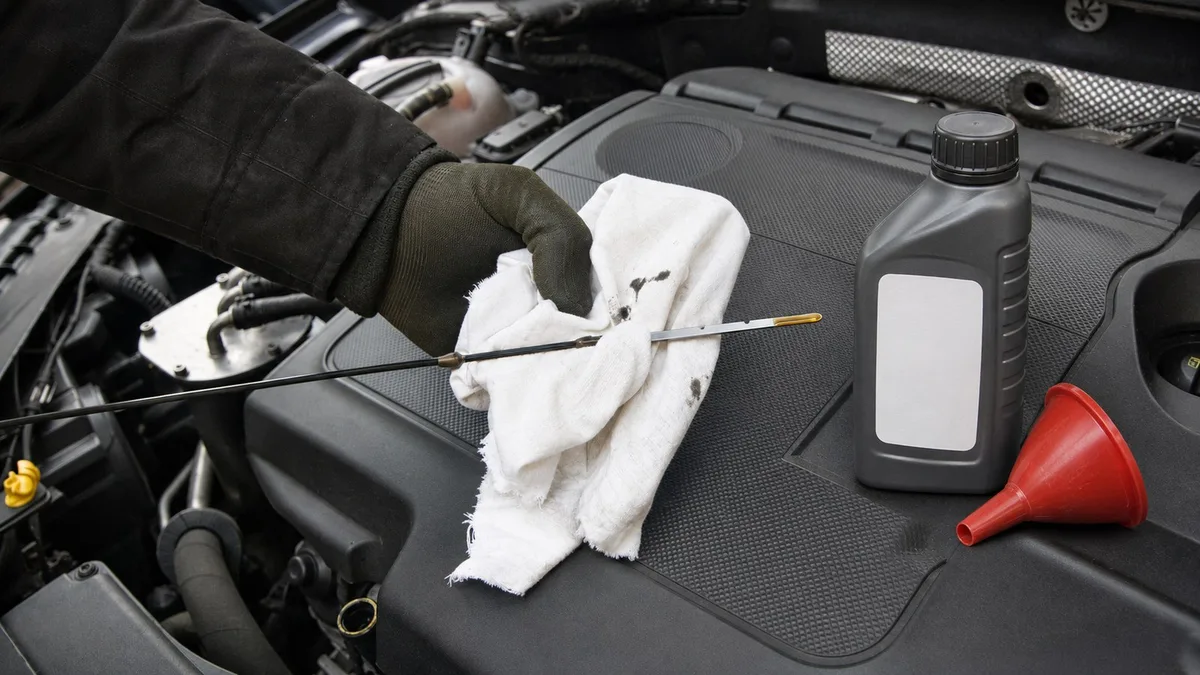
Topping off adds oil to bring the amount back into the vehicle’s specified operating range. In a topping off oil vs oil change comparison, this is the quantity task: it does not drain the existing oil or replace the filter. Castrol explains that a top-up leaves the old oil in the engine.
A complete oil-and-filter service does a different job. It removes used oil, replaces the filter and refills with the appropriate oil, following the vehicle’s procedure. The correct maintenance interval still comes from the owner’s manual and any applicable manufacturer monitoring system.
Situation | Relevant next action | What not to assume |
|---|---|---|
Level is low; service is not yet due | Check the manual and restore the correct level as directed | A future service appointment makes a low level acceptable today |
Oil change is due; level is normal | Arrange the specified oil-and-filter service | A full dipstick means the oil never needs changing |
Level is low and service is due | Address the level safely and arrange the overdue service | Buying a quart replaces the complete maintenance job |
Oil-pressure stop warning appears | Stop safely and follow the manufacturer’s warning instructions | Adding oil automatically resolves the cause |
Use the table to identify the task, not to diagnose an engine fault. Unusual noise, a leak or a repeated drop in level needs its own assessment. If the situation is unclear, get vehicle-specific advice before continuing to drive.
Oil level, oil life and oil pressure answer different questions
Oil level concerns the amount present, oil life concerns the maintenance estimate, and oil pressure is a separate operating warning. Confusing them is a common mistake when deciding between topping off oil and an oil change. A high oil-life percentage is not a measurement showing that the engine contains enough oil.
Chevrolet’s Oil Level feature guide distinguishes the volume display from Oil Life and shows separate low, normal and overfilled states. That feature is not on every vehicle; many use a physical dipstick or a different electronic procedure. Find the instructions for your actual model and engine.
Similarly, an oil-change reminder does not identify every possible reason for a warning light. Write down the exact message or symbol and consult the manual. A service reminder and a stop-engine pressure message should not be handled as if they were the same notification.
Check the correct oil and procedure before adding any
Use the oil specification and checking procedure in your owner’s manual before topping off. An oil change quote or the color of a bottle is not enough to identify the correct product. Confirm the viscosity grade and any required manufacturer approval for the particular engine. The API Motor Oil Guide explains oil-quality marks and service categories to help you read the label.
Read the level under the conditions the manual specifies. A physical dipstick check and an electronic reading may require different engine-temperature or waiting procedures, so there is no single universal instruction that fits every vehicle. Work on level ground as directed, avoid hot components and do not open or handle parts you cannot identify safely. Ford’s model-specific oil-check instructions illustrate why the correct manual matters: they specify how to check the dipstick and warn against filling above MAX. Do not assume that example procedure applies to a different engine.
If a top-up is appropriate, add only the amount needed under the manufacturer’s instructions and recheck as directed. Do not pour in the full oil-change capacity on top of oil already in the engine. Chevrolet’s Oil Level guide includes an overfilled state requiring adjustment, which is another reason to avoid treating more oil as automatically better.
For example, a manual’s full-service capacity might describe an emptied engine and a new filter. That number does not tell you how much to add to a partly filled engine. In a topping off oil vs oil change decision, first establish whether you are correcting the existing level or refilling after a completed drain-and-filter procedure.
Why repeated top-ups do not reset the service interval
Topping off oil does not replace an oil change or reset its service interval. It leaves existing oil and the filter in service, so it is not a sound basis for restarting the maintenance clock. Follow the vehicle’s specified schedule instead of estimating that the engine has gradually replaced its own oil.
Chevrolet says its oil-life monitoring system estimates service needs from vehicle use and that the monitor is reset after the oil-and-filter change is complete. Its support page also gives a time-based service requirement for the vehicles it addresses. Those Chevrolet instructions should not be turned into a universal mileage or time rule for every brand.
If you have no reliable record of the last change, find the previous invoice or ask the service provider. An oil-life display is less useful if someone reset it without completing the work. Record the date, odometer reading, oil specification and filter service after the job is actually done.
Do not reset the monitor merely to clear an inconvenient reminder after topping off. When a change is due, arrange the service. If the car also has a low level or another warning, ask how to handle that condition before driving to the appointment.
Compare the costs without treating the jobs as interchangeable
The cheaper immediate purchase may not satisfy the maintenance need. For an illustrative topping off oil vs oil change comparison, assume the correct quart costs $9 and a quoted oil-and-filter service costs $65. These are invented example prices for arithmetic, not market averages or estimates for your vehicle.
If only the level needs correction, the applicable top-up may be the immediate task. If service is also due, spending $9 does not turn the $65 service requirement into a completed job. Depending on timing and the vehicle’s condition, both costs may arise rather than one replacing the other.
Ask a shop what its quote includes: the required oil specification and quantity, a filter, labor and any applicable charges. Keep leak diagnosis or other repairs separate so you can compare the same service between quotes. A low advertised price may not describe the oil or work your engine requires.
The Total Cost of Ownership Calculator includes a maintenance-and-repairs input for broader ownership planning. Enter your own expected costs; the tool does not decide whether an engine is safe to run. If the concern is coverage, the warranty versus service-contract guide explains why routine maintenance and covered repairs need separate checks.
What should you record if the level keeps falling?
Record repeat additions and seek a vehicle-specific assessment instead of using repeated top-ups as the whole maintenance plan. The topping off oil vs oil change distinction still matters, but neither action alone explains why the level is dropping. Chevrolet advises arranging service when oil leaks are noticed.
Keep a short log of the date, odometer reading, amount added, product used and any warning or visible leak. For a hypothetical record, “½ quart added at 48,200 miles; ½ quart added at 48,500 miles” is more useful to a technician than “it needs oil often.” That example is not a diagnostic threshold for normal consumption.
Give the shop the maintenance history and exact warning wording as well. If a stop-engine pressure warning occurs, follow the manufacturer’s immediate instructions rather than continuing a mileage log while driving. The correct next action should match the warning and the vehicle’s condition.
FAQ
These answers clarify topping off oil vs an oil change without replacing the vehicle’s manual.
If the dipstick reads full, can an oil change still be due?
Yes. The level and service interval answer different questions. A normal amount does not demonstrate that the oil-and-filter service is current.
Should you reset oil life after adding a quart?
Do not reset an oil-change monitor simply because oil was added. Follow the model’s procedure after the required service has actually been completed.
Can a top-up make a low-pressure warning safe to ignore?
No. Do not treat that as established without following the manufacturer’s warning instructions and resolving the cause. Topping off oil versus changing it is a maintenance distinction, not clearance to drive with a stop-engine warning.
Spotted an error? Tell our editors. Read our corrections policy.