Paid Off Your Car Loan but Still Have a Lien? How to Get a Clear Title
Paying off an auto loan does not always mean a clear title arrives automatically. Learn how to obtain a lien release, check electronic title records, and prepare your car for sale.
This article is general information, not financial advice. Rates, prices and rules change; check the details with a qualified professional or the lender before you decide.
In this article
- What Happens to Your Car Title After You Pay Off the Loan?
- What Is a Lien Release?
- Paid-Off Loan vs. Clear Title
- How Long Does It Take to Receive a Title After Payoff?
- How to Remove a Lien From a Car Title
- State-by-State Examples
- What if You Paid Off the Loan but Never Received the Title?
- What if the Lender Went Out of Business?
- Can You Sell a Car With a Paid-Off Lien Still Listed?
- What if the Lien Release Contains an Error?
- Can There Be More Than One Lien on a Car?
- How to Avoid Problems Before Paying Off Your Loan
- Frequently Asked Questions
- The Bottom Line
If a car loan is paid off but a lien remains on the title, the owner may need a lien release from the lender and an update to the state's vehicle title records. Paying the remaining loan balance generally satisfies the financing obligation, but the lienholder's recorded security interest may still appear until the appropriate release procedure is completed.
A lien is a legal interest that gives a creditor certain rights in property securing a debt. When a vehicle loan is satisfied, the lender ordinarily must release its lien according to the applicable state requirements.
The process varies depending on whether the state uses paper titles, an electronic lien and title system, or a combination of both.
What Happens to Your Car Title After You Pay Off the Loan?
After full payment, the lienholder normally provides or records evidence that the secured debt has been satisfied. The vehicle owner may then receive a clear title automatically or need to submit the release documentation to the DMV.
The outcome depends on the state's rules and how the title was originally held. Some states issue electronic titles and automatically update the ownership record after the lender transmits a release.
Others require the owner to keep an original lien release with the existing title or apply for a replacement title without the recorded lien.
What Is a Lien Release?
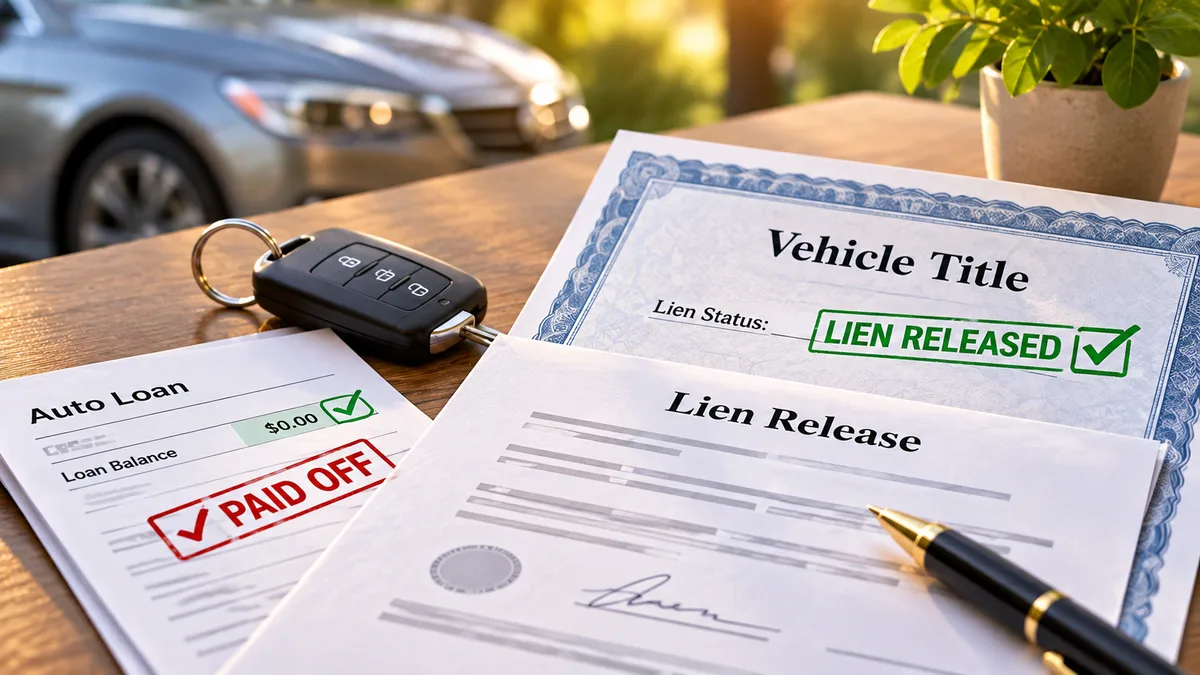
A lien release is documentation showing that the lender's security interest in the vehicle has been satisfied or relinquished. It is different from a bank statement showing a zero loan balance.
Acceptable documentation may include an endorsed title, a state-specific lien release form, or an official letter identifying the borrower, vehicle, and released security interest.
For example, New York DMV accepts an appropriate Notice of Recorded Lien, Form MV-901, or a qualifying original lender letter. The letter must identify the relevant vehicle and demonstrate that the lien has been satisfied.
Paid-Off Loan vs. Clear Title
Item | What it proves | What it may not prove |
Final loan statement | Account balance has been paid | DMV title record is clear |
Payment confirmation | Funds were submitted | Payment has fully settled |
Lien release | Lender's security interest was released | State title record has been updated |
Clear title | Title no longer displays the released lien | Vehicle has no other undisclosed problems |
Vehicle history report | May reveal certain title events | Does not replace official title records |
A seller should not promise immediate delivery of a clear title merely because the last installment was paid yesterday. The payoff must be finalized and the release processed.
How Long Does It Take to Receive a Title After Payoff?
The time required depends on the state, lender, electronic reporting system, and whether physical title documents must be mailed. There is no single nationwide rule requiring every DMV to issue a clear paper title within the same number of days.
A lender may need time to confirm that the final payment has cleared. The lender then provides or electronically records the lien release according to applicable requirements.
If the expected period has passed, contact the lender and ask for confirmation of the release date, method of transmission, and any tracking or reference number.
How to Remove a Lien From a Car Title
Removing a paid lien usually requires confirming satisfaction of the loan and following the state's title correction or lien-release procedure.
Step 1: Confirm the Auto Loan Is Fully Paid
Request a final statement or payoff confirmation from the lender. Ensure that all accrued interest, applicable fees, and other amounts included in the payoff calculation have been satisfied.
A regular monthly payment amount may differ from the lender's official payoff quote because interest can accrue between statement dates.
Step 2: Request the Lien Release
Ask the lender for the document or electronic confirmation used in the relevant state. The release should identify the vehicle correctly, usually including the VIN.
If the lender has already submitted an electronic release, ask when the state is expected to update its records.
Step 3: Check the DMV Title Record
Visit the official motor vehicle agency website for the state in which the vehicle is titled. Determine whether it offers online title status checks or requires an in-person or mailed request.
Use the exact vehicle identification number and owner's information where required.
Step 4: Submit Documents if Necessary
Some states require an application, original lien release, original title, identification, and a title issuance fee. Others process the release automatically.
Avoid mailing original documents before confirming the official agency's instructions and destination.
Step 5: Verify the Updated Ownership Record
After processing, confirm that the lien no longer appears or that the lender's release can be used legally when transferring ownership. Keep copies or originals according to state requirements.
State-by-State Examples
State | General procedure |
New York | Owner can retain proper lien release with title or apply to remove lien from the title record |
Texas | Lien releases may be processed electronically or through required title documents |
Virginia | Electronic lien release and title procedures depend on the record and lender participation |
In New York, owners may submit the original title, acceptable lien release documentation, and the applicable fee to obtain a title without the lien. The DMV also states that a clear replacement title is not always mandatory merely because the lien was satisfied; retaining valid original release documentation can be sufficient for certain transfers.
The distinction matters because a buyer or out-of-state authority may have its own documentation requirements.
What if You Paid Off the Loan but Never Received the Title?
First determine whether your state uses electronic titles. A lender's failure to mail a paper title does not necessarily mean it failed to release the lien.
Ask the lender to confirm how and when the release was transmitted. Then verify whether the DMV has updated the record.
If the lender states that the release was sent but the state cannot find it, request transaction confirmation or a replacement release according to the lender's procedures.
What if the Lender Went Out of Business?
A lender that merged, transferred its loan portfolio, or closed may have a successor responsible for account records and lien releases. Begin with the current servicer, successor institution, or entity that acquired the loan.
Gather the original finance agreement, payoff records, VIN, title number, and any prior correspondence. The DMV may have special procedures for unavailable lienholders, but these vary by jurisdiction.
Do not fabricate a lien release or use an unofficial third-party form. If the institution cannot be identified, the state's motor vehicle agency may explain approved alternatives.
Can You Sell a Car With a Paid-Off Lien Still Listed?
A vehicle can sometimes be sold using the existing title together with an accepted original lien release. Whether that is sufficient depends on state law and the destination state's title-transfer rules.
For a private sale, explain the title status honestly and provide valid documentation. Buyers may require a clean title before completing payment, especially when purchasing from another state.
A dealer may also have internal requirements or request additional processing time. Obtaining a clear title before listing a vehicle can reduce negotiation problems and closing delays.
What if the Lien Release Contains an Error?
A lien release containing an incorrect VIN, lender name, borrower details, or payoff information may be rejected. Ask the lienholder to issue corrected documentation rather than manually altering it.
Keep the rejected document and any DMV notice explaining the problem. A clear record helps resolve mismatches between lender and government systems.
Can There Be More Than One Lien on a Car?
Yes. Certain vehicles may have additional recorded security interests or legal claims. Paying the principal auto loan does not necessarily remove unrelated liens.
A title check should establish which lienholder remains recorded and whether the release covers that specific interest. Official state records take precedence over assumptions based on a single loan account.
How to Avoid Problems Before Paying Off Your Loan
Before sending the final payment, ask how the lender will release the lien and which address or electronic title record it has on file. Update your mailing information and confirm whether further action is required.
After payoff, keep the lender's confirmation and check the title record before selling, trading in, or moving the vehicle to another state.
Frequently Asked Questions
Does a car title automatically become clear after payoff?
Not always. Some states automatically process electronic releases, while others require documentation or a title application.
Is a zero loan balance the same as a lien release?
No. A zero balance is evidence of the loan's financial status, but the title record may require separate release documentation.
Do you have to pay for a replacement title?
Some states charge an applicable title issuance fee. The fee and procedure depend on the jurisdiction.
Can a dealer accept a lien release instead of a clear title?
Some transactions permit it, but dealer requirements and state rules vary. Confirm before relying on the documentation.
What if the lender refuses to release a satisfied lien?
Request a written explanation, retain payoff records, and contact the appropriate regulator or state motor vehicle agency if the lender fails to meet applicable obligations.
The Bottom Line
Paying off an auto loan and clearing the vehicle's title are connected but separate processes. The owner should obtain proof of lien satisfaction, determine whether the state records releases electronically, and verify the title before attempting a sale.
A complete title record makes ownership transfers easier and reduces the risk of delays when trading in, refinancing, registering, or selling the vehicle.
Spotted an error? Tell our editors. Read our corrections policy.