Available Balance vs. Current Balance: Which Amount Can You Spend?
Your checking account may show two different balances, but they do not necessarily represent the same amount of spendable money. Learn why the numbers differ, how pending payments work, and how to avoid expensive overdraft surprises.
This article is general information, not financial advice. Rates, prices and rules change; check the details with a qualified professional or the lender before you decide.
In this article
- What Is the Current Balance in a Bank Account?
- What Is the Available Balance?
- Available Balance vs. Current Balance: A Side-by-Side Comparison
- Why Is My Available Balance Lower Than My Current Balance?
- Can the Available Balance Ever Be Higher Than the Current Balance?
- How Pending Transactions Change Your Balance: A Three-Day Example
- Can You Overdraw an Account Even When Your Available Balance Looks Sufficient?
- How Long Do Pending Transactions Take to Clear?
- What About Pending Deposits and Checks?
- Five Ways to Avoid Balance Surprises
- What if the Balance Appears Incorrect?
- Frequently Asked Questions
- The Bottom Line
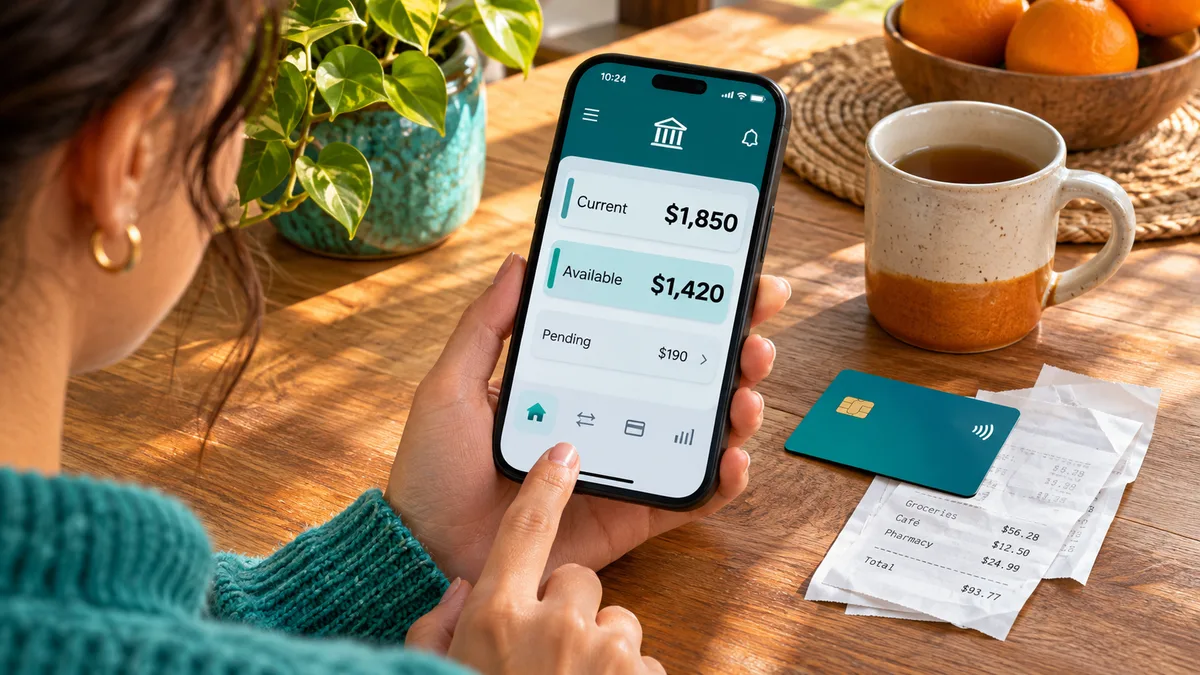
The difference between available balance vs. current balance is that available balance generally reflects money currently available for transactions, while current balance usually reflects transactions that have already posted to the account. Pending debit card payments, temporary holds, and deposit availability restrictions can make the two amounts different.
For example, a checking account might show a current balance of $1,850 and an available balance of $1,420. The $430 difference could reflect purchases that have been authorized but not yet completed, even though the bank has already reserved the money.
Understanding these figures matters because neither one guarantees that every upcoming payment will clear. Banks process transactions at different times, merchants can adjust final charges, and some pending items may not appear immediately.
What Is the Current Balance in a Bank Account?
The current balance is generally the amount recorded in an account after the bank has posted completed transactions. It is sometimes called the ledger balance, although terminology varies across financial institutions.
If an account began the morning with $2,000 and a completed $150 payment was posted, its current balance would generally be $1,850. A purchase authorized later that afternoon might not reduce the current balance until the merchant submits the final transaction.
The important distinction is that posted transactions and pending authorizations are not necessarily recorded in the same way. A current balance can therefore appear higher than the amount a customer should safely plan to spend.
What Is the Available Balance?
The available balance generally represents the money the bank currently makes available for withdrawals, transfers, and purchases after accounting for certain holds and pending activity.
The Consumer Financial Protection Bureau explains that available balance calculations commonly begin with the ledger balance, add deposits that the bank makes available, and subtract pending debit authorizations. Institutions may use different processing policies, so the exact result depends on the account agreement.
Available balance is usually the more relevant starting point for deciding whether a new purchase can be made. However, it should not be mistaken for a promise that the amount will remain available until every outstanding transaction is processed.
Available Balance vs. Current Balance: A Side-by-Side Comparison
Feature | Current balance | Available balance |
Posted deposits | Generally included | Included when available |
Posted withdrawals | Deducted | Deducted |
Pending debit card purchases | May not yet be deducted | Often reduce the balance |
Deposit holds | May appear in the recorded balance | Can restrict access to funds |
Temporary merchant holds | May not affect the posted balance | Often reduce spending capacity |
Best use | Reviewing posted account activity | Estimating funds available now |
Main limitation | May exclude pending payments | May change as authorizations settle |
Some banks display other figures, including an overdraft-inclusive balance. Customers should check whether the displayed amount includes overdraft credit or other borrowing facilities rather than money already owned.
Why Is My Available Balance Lower Than My Current Balance?
An available balance is commonly lower because a bank has reserved money for transactions that have not yet posted. These reservations are particularly common with debit card purchases, gas stations, hotels, rental cars, and certain online orders.
Pending Debit Card Purchases
A pending debit card purchase often reduces the available balance before it affects the current balance. The merchant sends an authorization request, and the bank reserves an amount while waiting for the final transaction.
A $95 restaurant transaction might first appear as a pending authorization for a smaller amount before the tip is finalized. The bank later replaces or adjusts that authorization when the merchant submits the completed charge.
Gas Station Authorization Holds
Gas station authorization holds may temporarily exceed the amount of fuel eventually purchased. The station and payment processor use a temporary authorization to confirm that sufficient funds may be available.
If the final fuel purchase is $48 but an initial hold is $125, the account may temporarily show $77 less available money than the eventual settled transaction requires. The release timing depends on the merchant and bank.
Hotel and Rental Car Deposits
Hotel and rental car holds can reserve funds for incidentals or potential additional charges. These amounts may remain unavailable until after checkout or vehicle return.
Customers should ask merchants about the authorization amount and expected release procedure before relying on the money for other expenses.
Can the Available Balance Ever Be Higher Than the Current Balance?
The available balance can occasionally be higher than the current balance because of the bank's treatment of deposits, available credit, or other account features. The explanation depends on how the institution defines and displays each figure.
For example, an institution may make certain deposited funds available before completing all internal posting steps. Other banks may show overdraft-related purchasing power separately from deposited funds.
A higher available figure should not automatically be treated as additional cash. The bank's balance description and account agreement determine what is actually available and whether borrowing costs could apply.
How Pending Transactions Change Your Balance: A Three-Day Example
Consider the following hypothetical checking account.
Event | Posted current balance | Available balance |
Monday morning: starting balance | $1,850 | $1,850 |
Monday: $180 grocery purchase authorized | $1,850 | $1,670 |
Monday: $250 hotel hold authorized | $1,850 | $1,420 |
Tuesday: groceries post | $1,670 | $1,420 |
Wednesday: hotel hold replaced by final $210 charge | $1,460 | $1,460 |
This simplified example assumes no other activity and that the bank replaces the entire hotel hold when the final charge posts. Real accounts may show different interim balances because of partial authorization releases, settlement timing, or other transactions.
The lesson is that the two balances can converge after transactions settle without the customer receiving or spending any additional money.
Can You Overdraw an Account Even When Your Available Balance Looks Sufficient?
An overdraft can still occur after an account displayed enough available funds for a transaction. A merchant may submit a final amount different from the original authorization, an automatic payment may arrive unexpectedly, or several transactions may post in a different order.
The CFPB has specifically addressed unexpected overdraft fees resulting from complex authorization and settlement practices. An institution's balance display does not eliminate the need to understand how transactions are processed.
For instance, imagine an account has $120 available. A pending $60 debit card authorization later settles for $85, while an automatic $50 subscription payment is also presented. The combined withdrawals could exceed the available funds depending on processing and other account activity.
Whether fees may be assessed depends on the type of transaction, applicable laws, the account's overdraft arrangements, and the bank's practices.
How Long Do Pending Transactions Take to Clear?
Pending transactions may clear within a few business days, but there is no universal settlement period for every merchant or transaction. Certain authorization holds can remain longer, particularly for hotels, car rentals, or purchases that have not been finalized.
Weekends and holidays may also affect transaction processing. A customer should not assume that a pending authorization automatically disappears after exactly 24 or 48 hours.
If an authorization remains unexpectedly, contact the merchant first to determine whether it has completed, canceled, or released the transaction. The bank can then explain how its system handles the authorization and whether further action is possible.
What About Pending Deposits and Checks?
A pending deposit does not necessarily mean the entire amount is immediately available to spend. Check deposit availability is subject to banking rules and the institution's funds-availability policy.
Direct deposits, cash deposits, mobile check deposits, and checks deposited through an ATM can have different availability rules. A bank may also place an extended hold when the applicable requirements are met.
Customers should review the available date shown by the bank rather than treat every visible deposit as cleared funds.
Five Ways to Avoid Balance Surprises
An accurate spending plan should account for upcoming bills and authorizations, not only the number displayed in the banking app.
- Review pending transactions before making a large purchase.
- Keep a record of automatic bills and subscriptions that have not yet been presented.
- Leave a reasonable cushion for merchant tips, fuel holds, and unexpected adjustments.
- Check deposit availability before spending a recently deposited check.
- Enable low-balance alerts and understand the bank's overdraft policy.
Eagle Post Daily's Budget Calculator can help allocate monthly take-home pay among essential expenses, discretionary purchases, and savings. It does not retrieve real-time banking data or predict transaction settlement.
What if the Balance Appears Incorrect?
An incorrect balance should be investigated by comparing completed transactions, pending items, deposits, and holds. A discrepancy does not necessarily indicate fraud, but unfamiliar activity deserves prompt attention.
Start by reviewing the transaction descriptions and dates. If the difference cannot be explained, contact the financial institution and ask whether the item is a posted transaction, pending authorization, deposit hold, or adjustment.
If an unauthorized electronic transfer or another covered error has occurred, federal error-resolution protections may apply. Customers should report suspected errors promptly and follow the institution's dispute process.
Frequently Asked Questions
Can I spend my available balance?
The available balance generally indicates what the bank currently makes available for transactions. However, future bill payments, unsettled purchases, and authorization adjustments can reduce that amount, so keeping a cushion is sensible.
Why did my current balance go down when my available balance stayed the same?
A pending purchase may have moved from authorized to posted status. The amount was already deducted from available funds, so final posting can reduce the current balance without changing the available balance.
Does a pending transaction mean the money is already gone?
A pending authorization generally reserves funds, but the final transaction may still be adjusted, canceled, or released. The customer should not assume that every hold will settle for exactly the authorized amount.
Is ledger balance the same as current balance?
Banks often use the terms similarly, but naming conventions differ. The account's own definitions should control how each displayed figure is interpreted.
Why is my balance different after a holiday?
Certain transactions, deposits, and merchant settlements may be processed on different schedules around weekends and bank holidays. Check which items are pending and which have posted before assuming an error occurred.
The Bottom Line
Available balance and current balance describe different stages of account activity. Current balance generally reflects completed postings, while available balance often accounts for pending transactions and restrictions on accessible funds.
For everyday spending, available balance is the more useful starting point, but it is not a substitute for tracking upcoming payments. Understanding pending transactions, deposit holds, and the bank's processing rules can prevent avoidable fees and financial surprises.
Spotted an error? Tell our editors. Read our corrections policy.