How to Fix a Credit Report Mistake Without Paying a Credit Repair Company
A wrong balance, unfamiliar account or incorrect late payment can complicate a loan application. This guide explains how to dispute a credit report error for free, document the problem and follow up when the investigation ends.
This article is general information, not financial advice. Rates, prices and rules change; check the details with a qualified professional or the lender before you decide.
In this article
- What credit report errors can you dispute?
- How to dispute a credit report error in five steps
- How long does a credit report dispute take?
- What if the credit bureau rejects your dispute?
- What if the incorrect account is identity theft?
- How to protect your finances while the dispute is open
- Credit report dispute mistakes to avoid
- Frequently asked questions
A credit report error can affect borrowing decisions even when a person has paid every bill on time. To dispute a credit report error, contact each credit bureau showing the mistake, send evidence explaining the inaccuracy and also contact the business that supplied the information. The dispute process is free, and the business and bureau generally must investigate under federal law.
The most effective approach is to identify the exact field that is wrong rather than demanding that an entire account disappear. A balance reported twice, a late payment assigned to the wrong month and an account opened by an identity thief require different evidence and sometimes different follow-up steps.
What credit report errors can you dispute?
You can dispute information that is inaccurate, incomplete or does not belong to you. The Consumer Financial Protection Bureau (CFPB) identifies wrong account statuses, duplicate debts, mixed files, incorrect balances and identity-theft accounts among common problems. Negative information that is accurate does not become removable merely because it lowers a credit score.
Start by marking the disputed entry on every report where it appears. If one bureau shows the wrong balance and the other two show the correct balance, identify that difference and keep copies. A thorough record can reduce confusion if you must later explain what was submitted and when.
How to dispute a credit report error in five steps
Successful disputes are specific, documented and trackable. The following sequence lets you address the reporting company and the original source without paying a credit repair service.
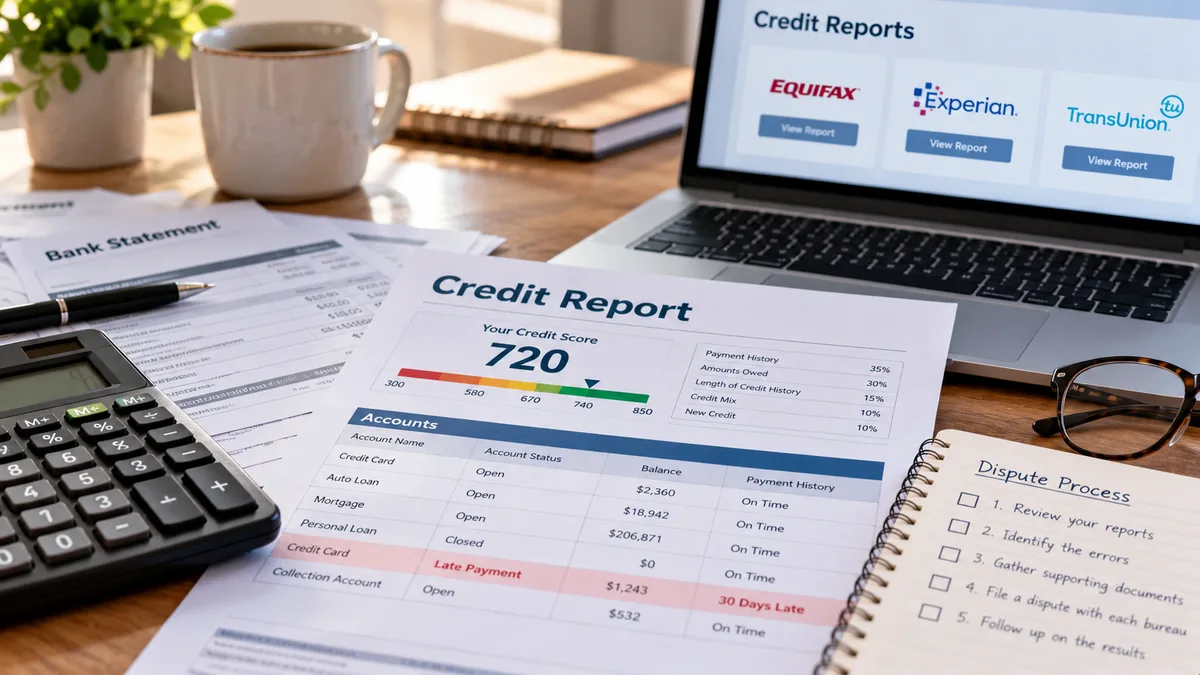
- Get your reports. Use the official AnnualCreditReport.com portal and inspect reports from Equifax, Experian and TransUnion. Do not assume all three reports contain the same information.
- Identify the precise error. Write down the bureau, creditor name, account reference, reported date or balance and the correct information.
- Gather supporting documents. Appropriate evidence might include a payment confirmation, statement, settlement letter, identity-theft report or account closure notice. Send copies rather than original documents.
- File a dispute with the bureau. Follow its online or written process, explain why the information is inaccurate and preserve a submission confirmation or mailing receipt.
- Dispute with the furnisher. Notify the lender, card issuer or debt collector that supplied the data, using the address designated for disputes and including the same supporting explanation.
Keep a dated dispute folder. A simple log of each report, attachment and response can be more useful than repeatedly submitting a vague request to remove the account.
How long does a credit report dispute take?
A credit reporting company generally has 30 days to investigate; some circumstances allow up to 45 days. The CFPB says the bureau generally must notify you of results within five business days after completing its investigation. The timing depends on when the dispute was received and whether additional relevant information was submitted.
A notice that an investigation is complete is not proof the disputed information was corrected. Read the results, compare the updated field with the original report and download the revised report if provided. If the creditor verified a balance you still believe is incorrect, ask what records were used to confirm it.
What if the credit bureau rejects your dispute?
If the bureau says the information is accurate, first check whether the original submission clearly identified the error and included evidence. A second dispute containing meaningful new documentation may be worthwhile; sending the same unsupported claim repeatedly can lead to a finding that it is frivolous or irrelevant.
The CFPB also describes the right to request a statement of dispute in your file. If you believe the bureau or furnisher failed to handle an eligible dispute properly, review the CFPB complaint process after the reporting agency's investigation has finished or the applicable waiting requirement has passed. Keep the final determination and supporting correspondence.
What if the incorrect account is identity theft?
An account you never opened requires a faster identity-theft response than an ordinary billing discrepancy. Use IdentityTheft.gov to create a recovery plan and preserve an identity-theft report where appropriate. Consider freezes with each of the three credit bureaus to reduce the risk of additional unauthorized accounts.
A credit freeze restricts most new-credit access to your report, while an ordinary dispute asks for existing incorrect data to be investigated. They serve different purposes and may both be needed. Freezing credit does not erase an already reported fraudulent account.
How to protect your finances while the dispute is open
Keep making required payments on legitimate accounts while the investigation proceeds. A dispute does not suspend contractual obligations, and a missed payment on a real debt can create a new reporting problem. If an upcoming home or auto application is time-sensitive, explain the documentation and timeline to the lender rather than assuming a bureau will finish immediately.
While reviewing reports, compare actual monthly commitments using the budget calculator and consider the debt payoff calculator for verified obligations. The broader personal finance section covers budgeting and borrowing decisions after the record is accurate. These tools do not change bureau data, but they can help separate reporting mistakes from debts that still need a repayment plan.
Credit report dispute mistakes to avoid
The biggest mistakes are failing to identify the disputed item, sending original proof, losing confirmation numbers and paying someone who promises to delete accurate negative entries. The Federal Trade Commission warns that legitimate credit repair cannot guarantee removal of true and current negative data. Consumers have the right to file disputes themselves without paying a third party.
Check all three reports after a correction, because an update to one record may not be reflected instantly across every company. Preserve copies of old and corrected versions for future credit, housing or employment-related questions.
Frequently asked questions
Does disputing a credit report error cost money?
No. Federal law provides a free process to dispute inaccurate or incomplete reporting with credit reporting companies and furnishers.
Can I dispute the same error with all three bureaus?
Yes. File with each bureau showing the mistake, and separately contact the company that furnished the information.
Will filing a dispute immediately raise my credit score?
No. A correction may affect a score depending on the data involved, but a dispute alone does not promise a score increase or a particular timeline.
Can an accurate late payment be deleted?
Usually not just because it is unfavorable. The appropriate dispute process addresses inaccurate or incomplete information.
What if a bureau closes the case without fixing the mistake?
Review its explanation, supply new relevant evidence if available, retain records and consider the CFPB's complaint guidance once the dispute is no longer pending.
Spotted an error? Tell our editors. Read our corrections policy.