Why Is My Dishwasher Leaving White Residue on Dishes?
If your dishwasher is leaving white residue, start by checking whether the haze wipes off a plain drinking glass. A cloudy patch that clears with a little white vinegar is consistent with a removable...
This article is general information, not financial advice. Rates, prices and rules change; check the details with a qualified professional or the lender before you decide.
In this article
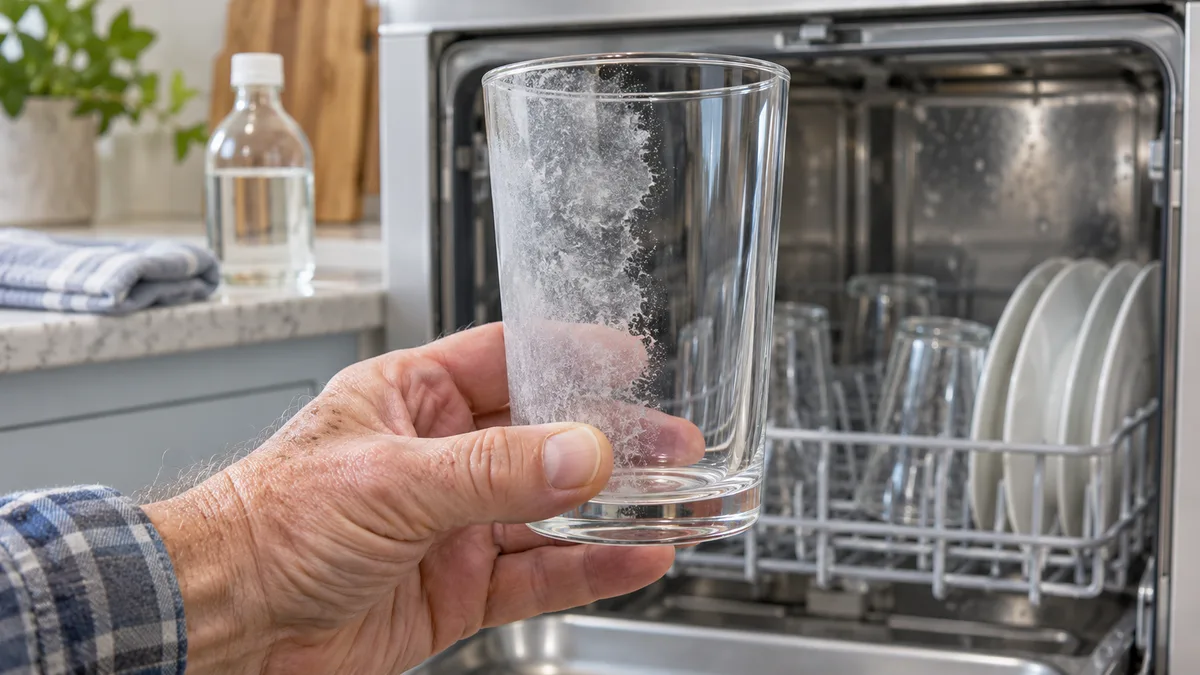
If your dishwasher is leaving white residue, start by checking whether the haze wipes off a plain drinking glass. A cloudy patch that clears with a little white vinegar is consistent with a removable film, commonly from hard-water minerals. Cloudiness that stays after cleaning may be permanent glass etching or a stubborn silica film. If you see loose powder or find detergent left in the dispenser, check how the machine is dispensing and rinsing before treating the whole tub for hard water. Whirlpool’s guide to cloudy glassware
Test one cloudy glass before treating the dishwasher
A small white-vinegar test can help identify removable dishwasher residue. Take a plain, undecorated glass out of the machine and gently rub one cloudy patch with a soft cloth dampened with white vinegar. Rinse it, dry it, and compare the patch with the rest of the glass in good light. Check the dishwasher tub, too. White film on both the glass and the tub makes mineral buildup worth investigating.
What you see | What to check next |
|---|---|
A test patch clears, and the tub or other dishes have chalky spots | Check your water hardness and your dishwasher’s instructions for mineral buildup. |
Powder or part of a tablet remains in the dispenser | Make sure a pan or cutting board isn’t blocking the dispenser lid or spray arm. |
Clean glass stays cloudy after the vinegar test, with no similar coating on the tub | Etching or a stubborn film is possible. Check detergent dosage and water hardness before washing more glassware. |
The test points you toward a cause, but it can’t identify every type of film. If you think a dish still has detergent on it, rinse it thoroughly and rewash it after checking the dispenser. Whirlpool’s guide to film and etching
What to do when hard water leaves white residue
For hard-water film, clean existing deposits and adjust the next wash for your actual water hardness. Hard water contains dissolved minerals, mainly calcium and magnesium. You can check the water utility’s hardness information or use a home test kit. If you have a water softener, measure at the tap that supplies the dishwasher or another tap on the same softened line. The hardness at your home can differ from the utility’s reported value. USGS water hardness guide
Use the dishwasher manual to choose a detergent dose for the hardness you measured. If the model has a rinse-aid dispenser, fill or adjust it according to the manual. Rinse aid can help water drain from dishes and reduce spotting as they dry. For buildup inside the machine, use a cleaner or descaling procedure approved for your model. Some manufacturers allow an occasional vinegar rinse, but their instructions differ, and Whirlpool cautions that frequent vinegar use can damage the appliance. GE Appliances detergent and hardness guidance and Whirlpool interior cleaning instructions
What to check if white residue appears after switching detergent
Start with the dispenser, loading, and dose if the dishwasher began leaving white residue after you changed detergents. Clear any dishes that could block the dispenser or stop a spray arm from turning. Follow the manual for detergent placement and use a product intended for automatic dishwashers. If your manual allows adjustable powder or gel dosing, use its suggested amount for your water hardness. Excess detergent in soft water can contribute to glass etching. GE Appliances on detergent and water hardness
On the next wash, change one thing at a time and include a clean, clear glass as a reference. If the glass stays clear but older glasses remain cloudy, the earlier damage may be permanent. If detergent still sits in the dispenser or dishes remain dirty after correct loading and dosing, follow the model’s instructions for checking its filter and spray arms. If the problem continues, tell the manufacturer or technician whether detergent remains, whether the tub has film, and what happened in the glass test.
For other appliance and maintenance questions, see the Real Estate & Home guides.
FAQ
Can I remove white dishwasher haze from etched glass?
Etching permanently changes the surface of glass. If a test patch stays cloudy after rinsing and drying, the haze may be etching or another stubborn film. Fix the wash conditions before putting more glassware through the same cycle.
Does rinse aid remove white dishwasher residue?
Rinse aid mainly helps reduce new spotting by helping water run off the dishes. Use your model’s approved cleaning method for mineral film already on the tub or dishes.
Why is the white residue mainly on plastic?
Start by washing one affected plastic item by hand. If the marks come off and return after a dishwasher cycle, compare the item with a clear glass from the same load. A matching film suggests a wash-water or detergent issue. Check that the plastic item is dishwasher-safe and place it on the rack recommended by its manufacturer.
Spotted an error? Tell our editors. Read our corrections policy.