What Questions to Ask When Buying a Used Car? 15 Before You Talk Price
A clean interior and short test drive cannot tell you everything about a used car. Ask these 15 questions before discussing price to uncover title problems, accident history, overdue maintenance, hidden fees, open recalls, and repairs that could cost you later.
This article is general information, not financial advice. Rates, prices and rules change; check the details with a qualified professional or the lender before you decide.
The Short Answer
- Your questions should cover four areas: who owns the car, what happened to it, what condition it is in now, and what the full deal will cost.
- Ask about title and history first, then maintenance, accidents, recalls, inspection, warranty, fees and financing.
- Check every answer against the paperwork and the car itself.
- Back the conversation with a history report, an NHTSA recall check and an independent inspection.
In this article
- 1. Can I See the Title and Confirm Who Owns the Car?
- 2. Why Are You Selling the Car?
- 3. Has the Car Ever Been in an Accident or Had Major Damage?
- 4. Do You Have Maintenance and Repair Records?
- 5. Are There Any Problems With the Car Right Now?
- 6. What Major Parts Have Been Replaced Recently?
- 7. Are There Any Open Safety Recalls?
- 8. Can I See the Vehicle History Report?
- 9. Can I Have the Car Inspected by My Own Mechanic?
- 10. Can I Take a Proper Test Drive?
- 11. How Old Are the Tires, Brakes, and Battery?
- 12. Is the Car Being Sold As Is or With a Warranty?
- 13. What Is the Total Out-the-Door Price?
- 14. If I Finance It, What Are the APR, Loan Term, and Total Amount Financed?
- 15. Is There Anything About This Car That Would Make You Hesitate to Take It on a Long Trip?
- Questions to Ask When Buying a Used Car From a Private Seller
- Questions to Ask When Buying a Used Car From a Dealer
- Red Flags After Asking These Questions
- The Bottom Line
Knowing what questions to ask when buying a used car can save much more than negotiating a few hundred dollars off the asking price. The right questions can reveal title problems, accident repairs, missing maintenance, open recalls, worn components, unexpected fees, or a seller who does not actually have the documents needed to complete the sale. The goal is to understand the car first and negotiate the price second.
Answers alone are not enough. Important claims should be checked against the title, VIN, maintenance records, vehicle history report, recall search, test drive, and independent inspection whenever possible. The Federal Trade Commission recommends reviewing vehicle history and service records, checking recalls, taking a meaningful test drive, getting an independent inspection, and asking a dealer for the total price before buying.
These questions to ask when buying a used car work for both dealership and private-party purchases, although some matter more in one situation than the other. Start with ownership and history, move to condition and maintenance, and discuss price only after the major unknowns have been reduced. That order makes it easier to judge whether the car is worth negotiating for at all.
1. Can I See the Title and Confirm Who Owns the Car?
This should be one of the first questions to ask when buying a used car from a private seller. The name on the ownership documents should make sense for the person selling the vehicle, and buyers should look for lien information or title branding that requires further investigation. The VIN on the paperwork should also match the VIN on the vehicle.
A dealer transaction works differently because the dealership may handle the title transfer, but buyers still need to understand how ownership will be transferred and whether any title problem exists. Do not accept a vague explanation that missing paperwork will somehow be fixed after payment. Ownership problems are much harder to solve once the seller already has the money.
2. Why Are You Selling the Car?
For a private sale, asking why the vehicle is being sold can provide useful context about its recent history. A normal answer might involve replacing the car, moving, changing transportation needs, or reducing the number of vehicles in a household. An unclear explanation is not proof of a problem, but it can justify additional questions.
Also ask how long the seller has owned the car. A vehicle that changed hands very recently deserves closer attention to the title, maintenance history, and reason for another quick sale. The seller’s story should be reasonably consistent with the documents and condition of the vehicle.
3. Has the Car Ever Been in an Accident or Had Major Damage?
Accident history belongs high on the list of what questions to ask when buying a used car because previous damage can affect value, safety, insurance, and future repairs. Ask about collisions, flood exposure, structural repairs, airbag deployment, hail damage, and any significant body work. Then compare the answer with the vehicle history report and physical inspection.
A history report is useful but should not be treated as a complete mechanical inspection. Consumer.gov recommends obtaining a vehicle history report, while the FTC also recommends having the car inspected by an independent mechanic. A clean report does not guarantee that every past repair or problem was reported.
4. Do You Have Maintenance and Repair Records?
Maintenance records help show whether previous owners took care of the vehicle consistently. Ask for oil-change records, scheduled services, major repairs, tire replacements, brake work, and documentation for expensive items such as timing belts or transmission service when relevant to that model. The FTC specifically advises buyers to review available maintenance records before purchasing a used vehicle.
Missing records do not automatically make a car unsuitable, but they create uncertainty. That uncertainty becomes more important on vehicles approaching expensive manufacturer-recommended maintenance intervals. Documented maintenance is more useful than being told that the car was “always taken care of.”
5. Are There Any Problems With the Car Right Now?
Ask directly about warning lights, fluid leaks, unusual noises, electrical problems, air-conditioning issues, oil consumption, starting problems, vibrations, or anything else the seller already knows about. A specific question is harder to brush aside than simply asking whether the car “runs well.” The answer also gives the mechanic a useful starting point during an inspection.
Pay attention to what happens when the engine is cold, not only after the seller has already warmed the car up. Some starting, smoke, battery, noise, and drivability problems are easier to notice during a cold start. A problem the seller describes openly can often be priced and repaired, while an unexplained symptom deserves more caution.
6. What Major Parts Have Been Replaced Recently?
Knowing what has already been replaced can help estimate near-term ownership costs. Ask about tires, brakes, battery, suspension, cooling-system components, air conditioning, exhaust, timing components where applicable, and major engine or transmission repairs. Receipts are especially valuable because they show when the work happened and what parts or services were actually provided.
Recent repairs are not automatically good or bad. A new battery is routine, while repeated transmission or cooling-system repairs may deserve a closer mechanical review. The important question is whether the work solved normal wear or points to a recurring problem.
7. Are There Any Open Safety Recalls?
Among the easiest questions to verify independently is whether the vehicle has an unrepaired safety recall. NHTSA provides an official VIN recall lookup that allows buyers to check a specific vehicle for open recalls. The FTC also recommends checking recall status before buying a used car.
Do not rely solely on the seller’s memory. Run the VIN yourself before completing the purchase, and ask how an open recall will be handled if one appears. A recall does not automatically make the car a bad purchase, but it should not remain an unanswered safety issue.
8. Can I See the Vehicle History Report?
A vehicle history report can provide information about prior ownership, recorded mileage, title history, and certain reported accidents or damage. Consumer.gov recommends obtaining one before buying a used vehicle.
Use the report as a screening tool rather than a substitute for inspection. Compare its dates, mileage, and reported events with the seller’s answers and available service records. Large gaps, inconsistent mileage, title issues, or unexplained changes deserve investigation before discussing price.
9. Can I Have the Car Inspected by My Own Mechanic?
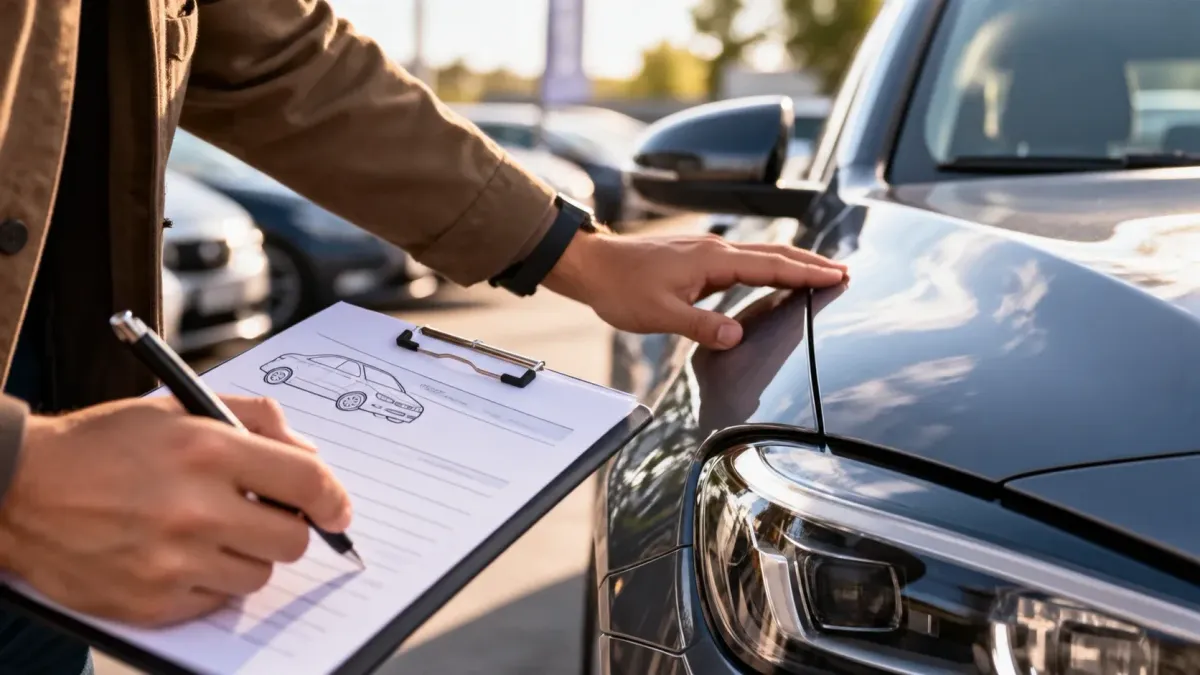
This is one of the most important questions to ask when buying a used car. The FTC recommends an independent mechanical inspection even when a dealership says the vehicle has already been inspected. A mechanic working for the buyer can identify repairs, safety concerns, leaks, wear, and maintenance needs that may not be obvious during a short test drive.
A seller does not have to agree to every buyer request, but refusing any reasonable form of independent inspection changes the risk of the transaction. Another inspection arrangement may sometimes be possible, particularly when a dealer will not allow the vehicle to leave the property. If there is no acceptable way to evaluate the car independently, the buyer should understand how much uncertainty remains.
10. Can I Take a Proper Test Drive?
A test drive should resemble the conditions in which the car will actually be used. Consumer.gov recommends testing the vehicle in relevant conditions rather than limiting the drive to a short trip around the block. Buyers should pay attention to acceleration, braking, steering, transmission behavior, vibration, visibility, noise, temperature, warning lights, and basic comfort.
Where practical and legal, include ordinary city streets and a higher-speed road rather than driving only through a dealership parking lot. Test features that matter, including climate control, windows, locks, cameras, infotainment, and driver-assistance equipment. The purpose is not simply to decide whether the car feels nice – it is to notice how it behaves.
11. How Old Are the Tires, Brakes, and Battery?
Tires, brakes, and batteries are normal wear items, but replacing several immediately after purchase can materially change the value of the deal. Ask when each was last replaced and inspect their current condition rather than accepting an answer based only on age. A pre-purchase inspection can provide a better assessment when remaining life is unclear.
For tires, check tread, uneven wear, visible damage, and the date information on the sidewall. Brake condition and battery health may require more than a visual check, especially if no service records exist. A car can run perfectly during a test drive and still need hundreds or thousands of dollars in routine wear items soon afterward.
12. Is the Car Being Sold As Is or With a Warranty?
For dealer purchases, this question should be answered by the paperwork rather than a salesperson’s memory. Under the FTC Used Car Rule, covered dealers must display a Buyers Guide on used vehicles, and the guide indicates whether the car is offered “as is” or with warranty coverage and describes applicable dealer warranty terms.
Read the actual coverage before assuming that “warranty included” means every repair will be paid in full. Look at duration, covered systems, deductibles, exclusions, and whether the dealer pays all or only part of covered repair costs. The written Buyers Guide and warranty documents matter more than broad verbal promises.
13. What Is the Total Out-the-Door Price?
When buying from a dealer, one of the most important financial questions to ask when buying a used car is the total price with required fees and charges included. Consumer.gov specifically recommends asking for the total price, including costs and fees, before purchasing. This helps prevent the negotiation from being reduced to a monthly payment that hides the complete cost.
Ask which accessories, protection products, service contracts, or other add-ons are optional. Review taxes and government fees separately from dealer charges so the structure of the price is clear. Negotiate the car and total transaction cost, not just the monthly payment.
14. If I Finance It, What Are the APR, Loan Term, and Total Amount Financed?
The monthly payment does not tell buyers whether an auto loan is inexpensive. Interest rate, APR, loan term, amount financed, fees, down payment, and optional products all affect the final cost. The Consumer Financial Protection Bureau recommends comparing financing offers and notes that buyers are not required to use dealership-arranged financing.
A lower monthly payment can simply result from stretching the loan over more months. Buyers can compare a dealer offer with financing from banks, credit unions, or other lenders before committing. Ask what the car costs and what the financing costs as two separate questions.
15. Is There Anything About This Car That Would Make You Hesitate to Take It on a Long Trip?
The final question is intentionally broad. It gives a private seller or salesperson an opportunity to mention a weak battery, aging tire, intermittent warning light, air-conditioning issue, oil leak, or other detail that did not fit neatly into the earlier questions. The response can also reveal how confidently the seller stands behind what has already been said.
Do not treat a reassuring answer as a mechanical guarantee. Verify the car through inspection, test drive, records, recall lookup, and paperwork before completing the sale. The best used-car purchase is one where the seller’s answers and the independent evidence tell essentially the same story.
Questions to Ask When Buying a Used Car From a Private Seller
Private sales deserve more attention to ownership and paperwork because there may be no dealership handling the transfer. Ask to see the title, confirm that the seller’s identity and ownership make sense, check for liens, verify the VIN, and ask how long the person has owned the vehicle. State title-transfer, tax, registration, and bill-of-sale requirements should then be checked with the appropriate motor vehicle agency.
The mechanical questions remain equally important. Ask about maintenance, accidents, current problems, recalls, and inspection, and do not skip the vehicle history report simply because the seller seems trustworthy. A friendly conversation is not a substitute for documentation.
Questions to Ask When Buying a Used Car From a Dealer
At a dealership, focus more heavily on the total transaction. In addition to condition and history, ask for the Buyers Guide, out-the-door price, warranty terms, optional add-ons, financing details, and anything the dealer promises to repair before delivery. The FTC Buyers Guide should make clear whether the covered dealer is selling the vehicle as is or with a warranty.
Financing deserves a separate comparison. The CFPB notes that consumers can seek offers directly from banks or credit unions rather than relying exclusively on dealer-arranged financing. A good car can still become a poor deal when unnecessary add-ons, fees, or expensive financing are attached to it.
Red Flags After Asking These Questions
The seller does not need to know every repair from the vehicle’s entire history, and missing one receipt is not automatically suspicious. The bigger concern is when important answers repeatedly conflict with documents or when reasonable verification becomes difficult. Several warning signs together deserve more attention than one minor uncertainty.
Watch for:
- VIN information that does not match the paperwork.
- A seller who cannot clearly explain ownership.
- An unresolved lien.
- Mileage that does not make sense across records.
- Accident claims that conflict with visible repairs or history.
- Refusal to allow any reasonable independent inspection.
- No clear explanation of dealer fees or add-ons.
- Pressure to discuss only monthly payment instead of total price.
- Important promises that the seller will not put in writing.
- Major mechanical symptoms dismissed without explanation.
A red flag does not always mean the car should be rejected immediately. It means the unanswered question should be resolved before money changes hands. When the seller pressures the buyer to move faster than the car can be properly checked, walking away remains an option.
The Bottom Line
What questions to ask when buying a used car comes down to four areas: who owns it, what happened to it, what condition it is in now, and what the complete deal will cost. Ask about title and history first, then maintenance, accidents, recalls, inspection, warranty, fees, and financing. Important answers should match the paperwork and the physical condition of the car.
There is no need to turn the purchase into an interrogation. Fifteen focused questions can reveal most of the information needed to decide whether a vehicle deserves a test drive, inspection, and price negotiation. The best time to discover an expensive problem is before the buyer has become emotionally or financially committed to the car.
The final decision should rely on more than the seller’s answers. A vehicle history report, NHTSA recall check, independent inspection, service records, written price, and clear ownership documents provide the evidence behind the conversation. That combination makes the questions to ask when buying a used car useful rather than merely conversational.
Frequently asked questions
What are the most important questions to ask when buying a used car?
The most important questions concern ownership, title status, accidents, maintenance records, current mechanical problems, recalls, inspection, warranty, and total price. Buyers should also ask to see a vehicle history report and verify important answers independently. The best questions are the ones that can change whether the car is worth buying at all.
What should I ask a private seller before buying a used car?
Ask why the car is being sold, how long the seller has owned it, whether the title is in the seller’s name, whether a lien exists, and whether the vehicle has experienced accidents or major repairs. Also request maintenance records, a history report, a meaningful test drive, and permission for an independent inspection. Verify state-specific paperwork requirements before paying.
What should I ask a dealer before buying a used car?
Ask for the Buyers Guide, vehicle history, maintenance information, inspection opportunity, total out-the-door price, warranty terms, optional add-ons, and financing details. Do not limit the discussion to monthly payment because loan term and APR affect the total amount paid. Every important dealer promise should appear in the written transaction documents.
Should I ask for a pre-purchase inspection?
Yes. The FTC recommends considering an independent mechanical inspection before purchasing a used car, even if the dealer says the vehicle has already been inspected. An inspection can identify safety issues, upcoming maintenance, and repairs that should be reflected in the buying decision.
Should I negotiate before or after a used-car inspection?
It is generally more useful to understand the vehicle’s condition before finalizing the price. Inspection findings can reveal repairs or maintenance that materially change what the car is worth to the buyer. Price negotiation is stronger when it is based on documented condition rather than guesses.
How can I check if a used car has an open recall?
Use NHTSA’s official recall lookup with the vehicle’s VIN. A seller may also provide recall information, but buyers can independently verify the status before completing the sale. Open safety recalls should be understood and addressed rather than ignored.
Sources
- Federal Trade Commission, Buying a Used Car From a Dealer
- Federal Trade Commission, Used Car Rule
- NHTSA, Check for Recalls: Vehicle, Car Seat, Tire, Equipment
- U.S. Department of Justice, National Motor Vehicle Title Information System
- Consumer Financial Protection Bureau, Auto Loans
Spotted an error? Tell our editors. Read our corrections policy.