Why Is My Tire Pressure Light Blinking and Then Staying On?
If your tire pressure light blinks for about a minute and then stays on, the tire pressure monitoring system (TPMS) has likely detected a fault. Check all four tires with a gauge as soon as you can...
This article is general information, not financial advice. Rates, prices and rules change; check the details with a qualified professional or the lender before you decide.
In this article
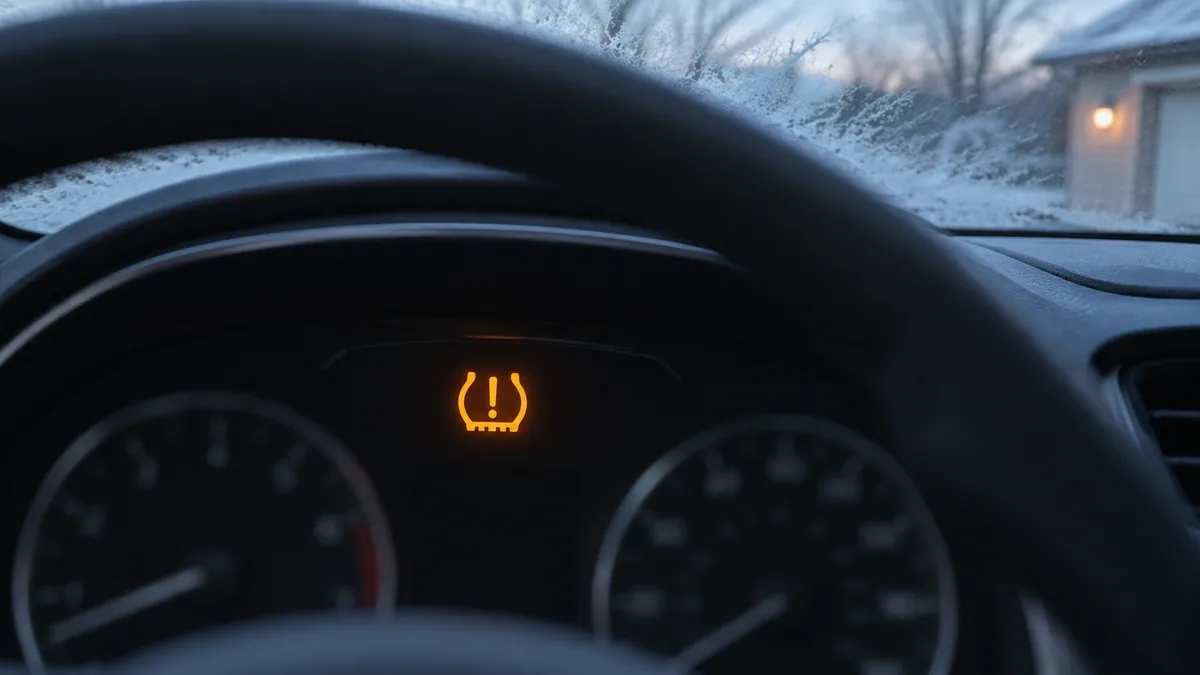
If your tire pressure light blinks for about a minute and then stays on, the tire pressure monitoring system (TPMS) has likely detected a fault. Check all four tires with a gauge as soon as you can safely stop. A system fault can leave you without a reliable low-pressure warning, so a tire can still be underinflated even if the original problem is with a sensor. A light that comes on steadily without the extended flashing usually calls for a low-pressure check. NHTSA tire safety guidance
What the tire pressure light is telling you
A tire pressure light that blinks for roughly 60 to 90 seconds before staying on points to a possible monitoring fault on vehicles that use this warning pattern. The sequence typically repeats at startup while the fault is present. If you only see the light after you’ve been driving, watch what happens the next time you start the vehicle while parked.
What you see | What to check |
|---|---|
Light appears briefly at startup and goes out | Check your owner’s manual. This may be the normal warning-light check. |
Light comes on steadily, with no extended flashing | Measure tire pressure and look for a low tire or a leak. |
Light flashes for about a minute and then stays on | Check the tires manually and arrange a TPMS inspection if the pattern repeats. |
Light comes on on a cold morning and goes out as you drive | Check all four tires when cold. One or more may have been near the low-pressure threshold. |
Your owner’s manual explains your vehicle’s exact pattern. For example, a Toyota manual distinguishes a brief startup check from a roughly one-minute flash followed by steady illumination. Some vehicles also display a separate fault message. Toyota tire pressure warning system instructions
What to do before you keep driving
If the tire pressure light blinks while you’re driving, check for a flat or visibly damaged tire as soon as you can safely pull over. If the car starts pulling, vibrating, or handling differently, ease off the accelerator, maintain control, and pull over in a safe place. For a flat tire, sidewall bulge, or visible damage, use roadside assistance or follow your manual’s spare-tire instructions if it’s safe to do so. If you can’t get to a safe spot to inspect the tires, call for help.
- Find the recommended pressure on the driver’s door placard or in the owner’s manual. Use the vehicle’s recommended front and rear values. The pressure printed on the tire sidewall is a different figure.
- Use a handheld gauge on all four tires. NHTSA defines a cold tire as one that hasn’t been driven on for at least three hours. If a tire is low and you’re already on the road, add air as needed and recheck the pressure when the tires are cold. Avoid bleeding air from a warm tire just because it reads above the cold target.
- If the pressure drops again or one tire consistently reads lower, have the tire checked for a leak. If pressures are correct and the light still blinks and stays on, have the TPMS checked. Tell the shop when the flashing starts and how long it lasts.
For example, suppose the door placard calls for 35 psi and your cold readings are 35, 35, 34, and 27 psi. The 27-psi tire needs attention even if the light also signals a monitoring fault. Bring it to the specified pressure if there is no visible damage, then have it checked if it loses air again. If you need to equip your car for a winter roadside stop, see the winter car emergency kit checklist. NHTSA tire pressure and safety guidance
Why the TPMS light can blink after tire or wheel service
A tire pressure light that starts blinking after a wheel swap can point to a sensor the vehicle hasn’t learned to recognize. If your model uses wheel-mounted sensors, a second set of wheels may have incompatible sensors or no sensors at all. A damaged sensor or one with a depleted battery can also cause a fault on systems that use battery-powered transmitters. Procedures vary by model, so tell the shop whether you recently installed winter wheels, replaced a sensor, or put on a temporary spare. Toyota Highlander Hybrid tire and sensor instructions
Set the tires to the correct cold pressure before following any reset or calibration procedure. Use the instructions for your specific model. If the tire pressure light still blinks and then stays on at the next startup, ask the shop to diagnose the fault before replacing parts.
FAQ
Can cold weather make the tire pressure light blink and stay on?
Cold weather can lower tire pressure enough to trigger a steady low-pressure warning. If the light repeatedly flashes for about a minute and then stays on, check the tire pressures and investigate a possible TPMS fault.
Can I drive with a blinking tire pressure light?
Stop somewhere safe and check the tires before deciding. If all four tires have the correct pressure, there is no visible damage, and the vehicle handles normally, arrange a TPMS inspection and monitor pressures manually until it’s fixed. A flat tire, rapid pressure loss, visible damage, or unusual handling calls for roadside help or the procedure in your owner’s manual.
Spotted an error? Tell our editors. Read our corrections policy.