Cashier’s Check vs. Money Order: Which Fits Your Payment?
A cashier’s check vs. money order decision starts with what the recipient accepts. Compare the full cost and the risk of losing the payment.
This article is general information, not financial advice. Rates, prices and rules change; check the details with a qualified professional or the lender before you decide.
In this article
A cashier’s check vs. money order comparison comes down to the recipient’s requirements, the amount and your access to an issuer. A money order can work well for a smaller prepaid payment, while a cashier’s check is often more practical for a larger amount. Before buying either, ask the recipient exactly which instrument is acceptable and whose name must appear on it.
Both require funding upfront. Neither makes a transaction with a stranger automatically safe, and replacing a lost payment can take time. The cheapest purchase fee is only one part of the decision.
Cashier’s check vs. money order at a glance
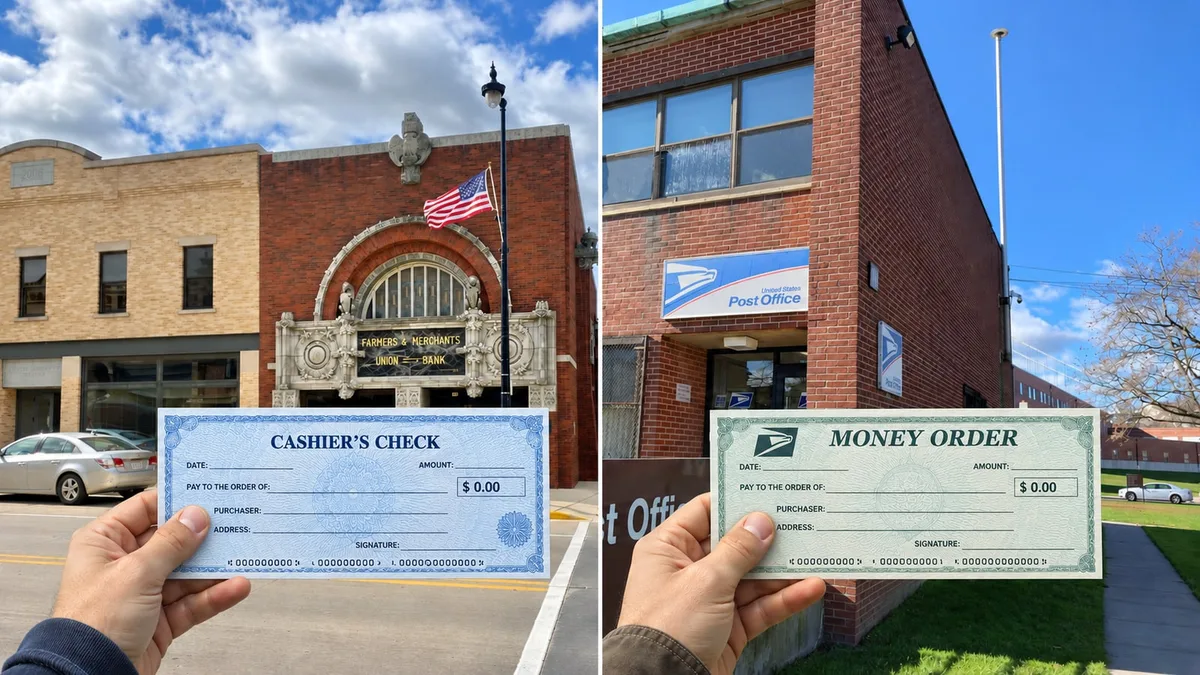
A cashier’s check is issued by a bank or credit union using the institution’s funds; a money order is a prepaid payment instrument sold by postal locations and other issuers. The purchaser supplies the money before the instrument is issued. Chase’s comparison explains why the first is commonly used for larger transactions and the second for smaller payments.
Question | Cashier’s check | Money order |
|---|---|---|
Where can you buy it? | A bank or credit union; eligibility varies | Post Offices and participating financial institutions or retailers |
What amount can it cover? | Ask the institution about its policies and available funds | Issuer limits apply; a domestic USPS money order is limited to $1,000 |
Is a bank account necessary? | Often; ask whether noncustomers are eligible | A postal money order can be purchased without opening an account |
What determines the fee? | Institution and account benefits | Issuer and sometimes the amount |
What happens if it is lost? | Contact the issuing institution; replacement may involve a waiting period and indemnity requirements | Follow the issuer’s inquiry and replacement procedure |
Do not treat all money orders as postal money orders. Retail issuers can have different payment methods, fees, tracking systems and replacement procedures.
Which one should you buy for your situation?
Choose between a cashier’s check and money order only after confirming that the recipient will accept it. A landlord who requests a cashier’s check may refuse several money orders even when their combined value is correct. For a closing, follow the closing agent’s verified funding instructions rather than substituting a payment method yourself.
For a smaller payment, compare nearby issuers and the cost of obtaining the instrument. For a larger payment, ask your bank about a cashier’s check before buying several smaller instruments. If the bank is closed or requires an appointment, that practical constraint may matter more than a modest difference in fees.
Use this decision sequence:
- Confirm the accepted payment type and exact legal payee name through a trusted contact.
- Ask the issuer about eligibility, amount limits, required identification and funding method.
- Get the total fee, including any applicable delivery charge.
- Confirm how the recipient will deposit or cash it and whether that creates an additional fee.
- Buy the instrument only when the payment amount and recipient are final.
If you are buying a car, a cashier’s check vs. money order decision also needs to fit the seller’s payment instructions and title-transfer process. Do not hand over funds merely because someone has supplied a convincing-looking document.
Compare the total cost, not just one issuing fee
The lower-cost choice is the one that meets the recipient’s requirements with the lowest combined issuing, delivery and replacement exposure. Check your account benefits first: an institution may waive a cashier’s check fee for certain accounts. A universal claim that money orders are always cheaper would overlook those benefits.
USPS lists domestic money order fees of $2.65 for $0.01–$500 and $3.75 for $500.01–$1,000, checked November 19, 2026. USPS accepts cash or a debit card for this purchase, not a credit card. Recheck the fee before paying because postal prices can change.
Consider a hypothetical $1,600 apartment payment where the landlord accepts either option. Two postal money orders of $800 would cost $7.50 in issuing fees, making the upfront total $1,607.50. Compare that with your bank’s actual cashier’s check quote; do not assume a particular bank fee. If the landlord accepts only one cashier’s check, the two-money-order calculation does not provide a usable alternative.
Write down each eligible option’s total before you buy.
What to check before leaving the counter
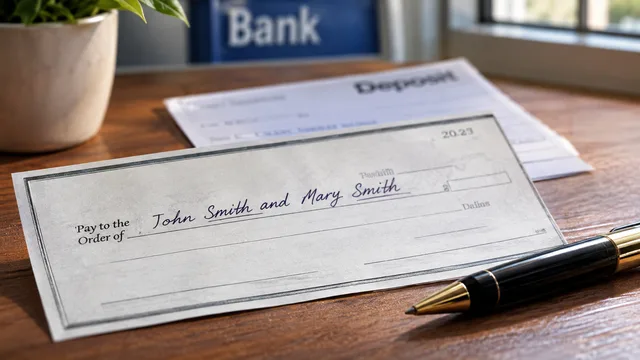
For either a cashier’s check or money order, verify the payee, amount and receipt before leaving. A misspelled business name or incorrect amount can turn a straightforward payment into a replacement problem. Ask the issuer how to correct an error instead of altering the instrument yourself.
Keep the purchase receipt and a private record of the instrument number until the payment is resolved. Deliver it through the agreed method, and obtain an acknowledgment when possible. Avoid sharing a full image publicly or sending it to someone who does not need the payment details.
A cashier’s check is different from your personal check, even if both have familiar-looking numbers. Eagle Post Daily’s guide to reading a check explains those fields; use your issuing bank to verify the details of a bank-issued payment.
If the payment disappears or the recipient reports a problem
Report a missing cashier’s check or money order to the issuer promptly and keep the receipt available. Ask whether it has been paid, which forms are required, what replacement costs apply and how long the process may take. Do not buy a second payment without discussing the risk that both instruments could be presented.
The Office of the Comptroller of the Currency explains that replacing a lost cashier’s check can require an indemnity bond, which protects the bank against the original later being presented. Its guidance notes that a bank may require a 30–90-day wait even after a bond is provided. Ask your institution for the procedure that applies to your check; this is not a universal same-day cancellation service.
USPS says you cannot stop payment on a postal money order, although an eligible lost or stolen one can be replaced. Its published investigation process can take weeks, and a replacement processing fee applies. Other issuers set their own procedures.
Does bank backing eliminate fraud risk?
No: a counterfeit cashier’s check or money order can look convincing without being genuine. The FTC warns that available deposit funds do not establish that a check is valid. A bank can discover the problem later, leaving the depositor responsible for money already sent onward.
Never refund an alleged overpayment by wire, cryptocurrency, gift card or another payment just because a check balance appears available. Contact the purported issuer using independently obtained contact information, and discuss unfamiliar payments with your own bank. A cashier’s check vs. money order comparison cannot replace verifying the person and transaction.
FAQ
These answers address common cashier’s check vs. money order decisions before purchase.
Can you buy a postal money order without a bank account?
Yes. USPS allows purchase with cash or a debit card; opening a bank account is not part of that purchase process. Bring enough to cover both the payment and issuing fee.
Can several money orders replace one cashier’s check?
Only if the recipient agrees to accept them and the issuer permits the purchase under its rules. Multiple instruments mean multiple fees and more receipts to track. Confirm acceptance before spending the money.
Is a cashier’s check the same as a certified check?
No. A cashier’s check is drawn on the institution’s funds, while a certified check involves the customer’s check being certified by the bank. Ask the recipient which specific type is required; the names are not interchangeable. Chase explains the distinction.
Which option is best for a small payment?
A money order may be convenient, but a waived bank fee or a recipient’s requirement can change the answer. Compare accepted options using the actual amount, current fees and replacement rules. The best cashier’s check vs. money order choice is the one that completes the payment correctly with a manageable total cost.
Spotted an error? Tell our editors. Read our corrections policy.