How to Read a Check: Routing Number, Account Number and Check Number
The three number groups along the bottom of a U.S. personal check help banks route and process payments. Here is how to identify each one and avoid common mistakes.
This article is general information, not financial advice. Rates, prices and rules change; check the details with a qualified professional or the lender before you decide.
In this article
A paper check can look old-fashioned, but its details still matter for direct deposit forms, automatic bill payments, and transferring money to the right bank account. If you are learning how to read a check, start with the row of numbers printed along its bottom edge. That row normally identifies the financial institution, the specific checking account, and the individual check.
The usual order on a U.S. personal check is routing number, account number, then check number. Still, designs vary, so confirm what you see against your bank’s online banking, mobile app, statement, or a bank representative before you submit any banking information.
The three numbers at the bottom of a check
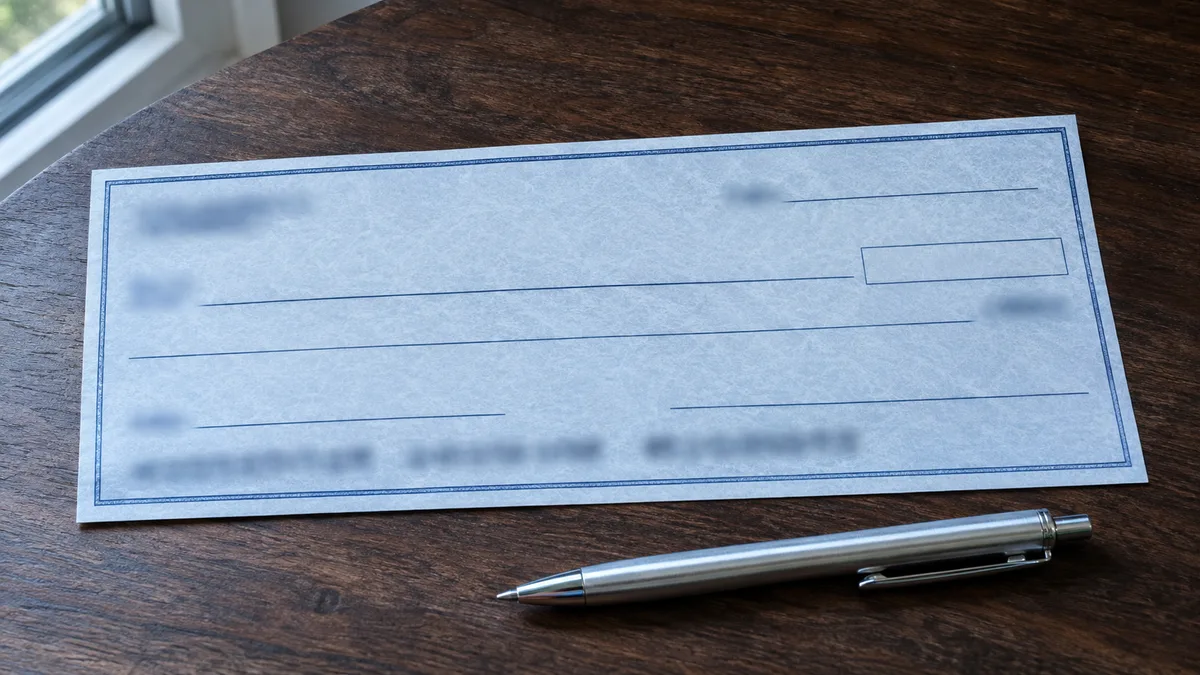
The special row at the bottom is called the MICR line, short for Magnetic Ink Character Recognition. It is designed so banks and payment systems can read the information consistently.
Number | Typical location | What it identifies | Common use |
|---|---|---|---|
Routing number | Far left | The bank or credit union | Direct deposit, ACH payments, check processing |
Account number | Middle | Your specific account | Deposits, withdrawals, and account verification |
Check number | Far right | That individual check | Tracking and reconciling a payment |
The American Bankers Association states that the ABA routing number is the left-most number on a check, followed by the account number and the check number. Chase and U.S. Bank show the same typical order on personal checks.
1. Find the routing number
The routing number is usually the first nine digits at the bottom-left of the check. It identifies the financial institution connected to the account. It is sometimes called an ABA routing number or routing transit number.
A routing number is not a personal account identifier. Many customers at the same bank may use the same routing number, while each person’s account number differs. Some banks use different routing numbers for different states or transaction types, so do not assume the number from another person’s check, a search result, or an old form is correct for your account.
Check the number before using it
For a direct deposit or ACH authorization, use the routing number your bank designates for that purpose. The safest places to confirm it are your bank’s secure website or app, a recent statement, or the bank directly. U.S. Bank, for example, tells customers that account and routing details are available through online banking and its mobile app.
2. Locate the account number
The account number usually follows the routing number in the center of the MICR line. This string identifies the individual checking account from which a check is drawn or into which a deposit should go. Unlike the routing number, its length is not universal: banks set their own account-number formats.
Look closely at the symbols around the number groups. On many checks, special MICR symbols separate the routing and account numbers. Those symbols are not digits and should not be typed into an online form unless the form specifically displays or requests them.
If you have several accounts at the same bank, verify that the number belongs to the intended checking account. An account number printed on a check may not match a savings account number, a debit-card number, or a credit-card number.
3. Identify the check number
The check number is generally the final number group on the bottom-right. It is also commonly printed in the upper-right corner of the check. Those two printed check numbers should match.
This number helps the account holder and bank distinguish one check from another. Record it in your check register or transaction notes when you write a check. If a check is lost, stolen, or appears in a transaction history, the check number can help you and your bank identify the exact item.
Read the rest of the check, too
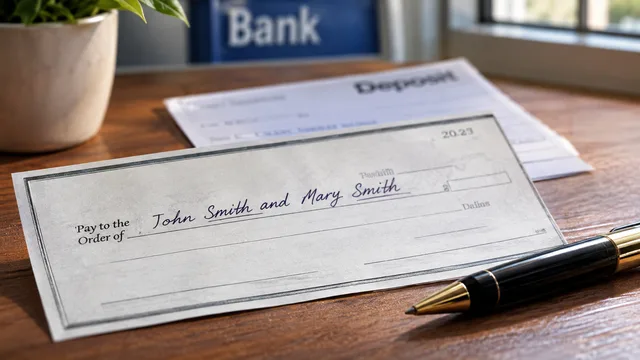
The number line is important, but it is only one part of a valid, understandable check. Before accepting or writing one, review the date, payee, numerical amount, written amount, memo, and signature line.
U.S. Bank notes that a check generally needs a recent issue date, a payee, matching numerical and written amounts, account and routing information, and the maker’s signature to be accepted for deposit or cashing. If the written and numeric amounts conflict, the written amount generally controls, according to its guidance.
A quick example
Imagine the bottom line reads, from left to right:
987654321 123456789012 1042
In this illustration, the first nine-digit group is the routing number, the middle group is the account number, and 1042 is the check number. The figures are only an example; never use sample numbers for a real payment or deposit form.
Safety tips when sharing check details
Routing and account numbers are routinely used for legitimate transactions, but they are sensitive financial information. Share them only through a trusted, secure process. Check that the website address is correct, avoid posting an image of a check online, and be cautious about sending check details by email or text.
For direct deposit, ask your employer or payer for its official enrollment process. For a recurring payment, start from the legitimate company’s account portal rather than following an unexpected message. If you suspect your account information has been misused, contact your bank promptly and review recent transactions.
FAQ
Is the routing number always nine digits?
For standard U.S. ABA routing numbers printed on checks, yes: it is a nine-digit number. Confirm the correct routing number with your bank, especially if you are making an electronic payment or wire transfer.
Which number is my account number on a check?
It is usually the middle group on the bottom line, immediately after the routing number. Its length varies by institution.
Is the check number part of my account number?
No. The check number identifies a specific check and normally appears at the far right of the bottom line and in the check’s upper-right corner.
What if I do not have paper checks?
You can usually find your account and routing numbers in your bank’s app, online banking, statement, or by contacting the bank directly.
Spotted an error? Tell our editors. Read our corrections policy.