How to Test a Sump Pump and Confirm It Drains
To test a sump pump in a dry basement, slowly add clean water to the sump basin until the pump starts automatically. Stop pouring once it starts. Watch the water level drop, check that water reaches...
This article is general information, not financial advice. Rates, prices and rules change; check the details with a qualified professional or the lender before you decide.
In this article
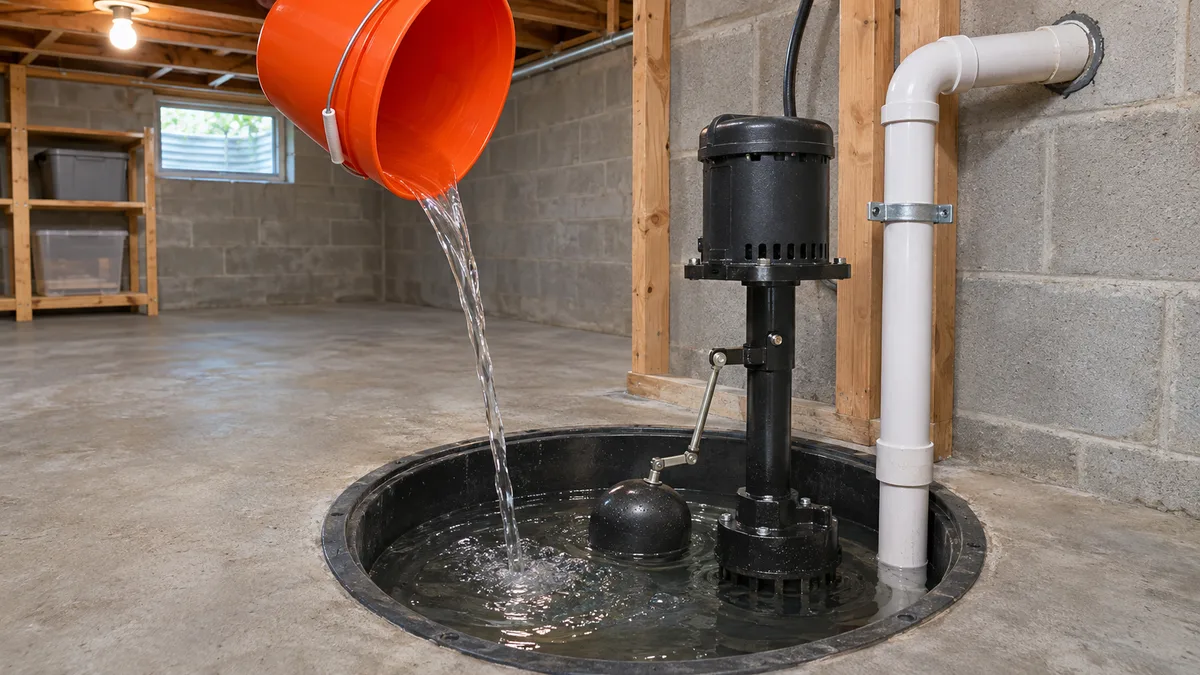
To test a sump pump in a dry basement, slowly add clean water to the sump basin until the pump starts automatically. Stop pouring once it starts. Watch the water level drop, check that water reaches the discharge outlet if you can see it safely, and confirm that the pump shuts off on its own. These checks tell you whether the pump responds to a rising water level and whether it moves the water out. Use your model’s instructions for accessing the basin and testing any backup pump. South Dakota State University Extension sump pump guidance
Check the basin and discharge before you test the sump pump
Test the pump before a storm, while the floor, plug, and electrical outlet are dry. If the basement is already flooded and water may be in contact with electrical equipment, stay out and get help from a qualified electrician. If your basin has a sealed cover, use only the test opening or procedure specified by the manufacturer. Keep hands and tools out of the basin while the pump is connected to power. CDC post-flood electrical safety guidance
Check the visible discharge line for a kink or disconnected section and look at the outside outlet for debris, snow, or ice. If the outlet is visibly blocked or frozen, take care of that before running a test, or have a plumber inspect it if you can’t reach it safely. If the outlet is accessible, note where the water should go so you can tell whether it drains away from the foundation. Local rules can restrict where sump water may be discharged. South Dakota State University Extension on sump pump discharge
Run a full sump pump test with clean water
Use enough clean water to activate the float switch and watch one complete start-to-stop cycle. The amount depends on the basin size, the existing water level, and the switch height. Start with a bucket and add water gradually instead of dumping it all in at once.
- Watch for an automatic start. With the pump powered as usual, pour clean water into the approved opening. Stop pouring when the pump starts. If the water nears the top without a response, stop the test.
- Check that the water moves out. The water level should fall while the pump runs. If possible, have someone watch the accessible outside outlet while you watch the basin.
- Wait for automatic shutoff. Once the level reaches the pump’s cutoff point, the pump should stop. Some water can remain below that point. Watch for a large amount of water rushing back or for rapid restarts after you’ve stopped pouring.
- Restore the cover or test plug. Once you’ve observed the full cycle, close the basin as the manufacturer directs.
The water test checks whether the sump pump responds to a rising water level without help. A brief run you trigger manually can tell you the motor starts, but it doesn’t verify that the pump will start at the right water level. Zoeller submersible sump pump quick-start instructions
What a failed sump pump test means
The point where the cycle fails tells you what to report to a plumber or the pump manufacturer. If there’s no automatic start, the power supply or switch may need attention. If the motor runs and the water stays put, stop adding water. A blocked or frozen discharge, a clogged intake, or a pump problem could keep the water from leaving. If water rushes back after shutoff and the pump immediately restarts, ask about the check valve, which is designed to keep water in the pipe from draining back into the basin. Zoeller battery backup instructions and troubleshooting
If the outlet is dry and safely accessible, you can check whether the plug is seated. Leave electrical faults, a pump that won’t shut off, and any work around standing water to a qualified professional. If a storm is approaching and the pump failed, arrange service before relying on it. For other cold-weather checks around the house, see the winter home preparation checklist.
FAQ
Do I need to test the backup sump pump separately?
Yes. The primary pump can pass while the backup fails to start. Follow the backup manufacturer’s test procedure and check the pump, controller, and alarm as directed. For models that call for temporarily disconnecting the primary pump, restore its power as soon as the test is complete.
Should the basin be empty after a sump pump test?
A small amount of water can remain below the float’s shutoff level. A passing test shows that the water drops enough for the pump to turn itself off and that the pump stays off when the water level stays below its start point.
Spotted an error? Tell our editors. Read our corrections policy.