Before You Buy a House, Know These 15 Things That Can Change the Deal
A home can fit the lender’s numbers and still be the wrong purchase. Before making an offer, understand the true monthly cost, loan terms, neighborhood, inspection risks, insurance, closing expenses, and the protections built into the contract.
This article is general information, not financial advice. Rates, prices and rules change; check the details with a qualified professional or the lender before you decide.
In this article
- What Should You Know Before Buying a House?
- 1. Know Your Real Budget, Not Just the Purchase Price
- 2. Know How Much Cash You Need Before Buying a House
- 3. Know Your Credit Before You Start House Shopping
- 4. Know That Preapproval Is Not the Same as Affordability
- 5. Know the Difference Between Loan Types
- 6. Know the Neighborhood Before You Fall in Love With the House
- 7. What to Know Before Buying a House About Insurance and Disaster Risk
- 8. Know What You Cannot Easily Change About the House
- 9. Know the Age of Major Home Systems
- 10. Know Why a Home Inspection Matters
- 11. Know That an Appraisal Is Not a Home Inspection
- 12. Know What Contingencies Are in Your Offer
- 13. Know What the Property Taxes Really Are
- 14. Know What the HOA Can Require
- 15. What to Know About Repair Costs Before Buying a House
- 16. What to Know About Closing Costs Before Buying a House
- 17. Know What You Are Signing at Closing
- 18. Know Why the Final Walk-Through Matters
- 19. Know How Long You Expect to Stay
- 20. Know That Homeownership Means Paying for the Problems
- What to Know Before Buying a House at a Glance
- Common Mistakes to Avoid Before Buying a House
- The Bottom Line
What to know before buying a house starts with one basic idea: the purchase price is only part of the decision. A home that looks affordable on a listing can become much more expensive once property taxes, homeowners insurance, HOA dues, utilities, maintenance, repairs, and financing costs are added.
Buyers also need to understand the property itself. Location, insurance availability, roof age, drainage, major systems, inspection findings, contract contingencies, and future resale can matter just as much as the kitchen or number of bedrooms.
The strongest home purchase is not simply one that receives mortgage approval. It is one that remains affordable after closing and still makes sense when the excitement of the showing is gone.
What Should You Know Before Buying a House?
Before buying a house, know how much the home will truly cost, what financing you can comfortably support, what risks come with the property, and which contract protections matter before closing.
The most important areas to understand are:
- Your real monthly housing budget.
- How much cash you need beyond the down payment.
- Your credit and mortgage options.
- The difference between preapproval and affordability.
- The true condition of the property.
- The neighborhood and location risks.
- Property taxes and HOA costs.
- Homeowners insurance availability and price.
- The importance of a professional inspection.
- How contingencies protect the buyer.
- Why an appraisal is not the same as an inspection.
- What closing costs may add to the purchase.
- Why major repairs can change the economics of the deal.
- What to review before signing final documents.
- Whether the home still fits your plans several years from now.
Knowing these points before touring seriously can prevent a buyer from becoming emotionally committed to a property that does not work financially or practically.
1. Know Your Real Budget, Not Just the Purchase Price
The most important thing to know before buying a house is how much the property will cost each month after all major expenses are included.
A mortgage payment may include principal and interest, but homeownership usually adds other recurring expenses such as:
- Property taxes.
- Homeowners insurance.
- HOA dues where applicable.
- Utilities.
- Routine maintenance.
- Repairs.
- Lawn care or snow removal.
- Pest control.
- Private mortgage insurance or other mortgage-related charges where applicable.
The Consumer Financial Protection Bureau specifically advises buyers to consider taxes, insurance, repairs, utilities, and other ownership costs rather than looking only at the mortgage payment.
The maximum amount a lender approves is not automatically the amount a household should spend.
A buyer may qualify for a larger mortgage than is comfortable after childcare, transportation, healthcare, savings goals, travel, and other regular expenses are considered.
2. Know How Much Cash You Need Before Buying a House
A down payment is only one part of the cash needed to purchase a home.
Buyers should also plan for expenses that may include:
- Closing costs.
- Inspection fees.
- Appraisal costs depending on the loan structure.
- Earnest money.
- Moving expenses.
- Homeowners insurance.
- Initial repairs.
- Utility setup.
- Furniture or appliances.
- Cash reserves after closing.
The exact amounts depend on the transaction, loan, location, and property.
This is an important part of what to know before buying a house because many buyers focus so heavily on the down payment that they underestimate everything that comes after it.
A buyer who can technically make the down payment but has no savings left afterward may be taking on unnecessary risk.
3. Know Your Credit Before You Start House Shopping
Mortgage lenders use credit information to help evaluate risk, loan eligibility, and pricing. Buyers should review their credit before they become serious about making offers.
The CFPB recommends checking credit reports early enough to identify and correct errors before applying for a mortgage.
A buyer should also avoid unnecessary financial changes during the mortgage process.
That can include:
- Opening new credit cards.
- Financing a vehicle.
- Taking out a personal loan.
- Increasing credit-card balances substantially.
- Closing long-standing accounts without understanding the effect.
- Making large unexplained financial transfers.
The reason is simple: lenders may review updated financial information before closing.
A mortgage preapproval does not freeze the borrower’s financial profile.
4. Know That Preapproval Is Not the Same as Affordability
Mortgage preapproval can help buyers understand how much financing a lender may be willing to consider, but it does not tell them how much they should comfortably spend.
The CFPB advises buyers to determine their own home-price budget and compare mortgage options before shopping seriously.
A practical home budget should leave room for:
- Emergency savings.
- Retirement contributions.
- Healthcare costs.
- Transportation.
- Childcare.
- Travel.
- Existing debt.
- Repairs and maintenance.
- Other household priorities.
If buying the home would leave almost no flexibility each month, the property may be too expensive even if a lender is willing to finance it.
5. Know the Difference Between Loan Types
Not every mortgage works the same way. Before buying a house, borrowers should understand which loan options may fit their credit profile, savings, property type, and long-term plans.
Depending on eligibility, buyers may encounter:
- Conventional mortgages.
- FHA-insured loans.
- VA-guaranteed loans.
- USDA loans.
- State or local assistance programs.
- First-time buyer programs.
Loan options can differ in:
- Down payment requirements.
- Mortgage insurance.
- Credit standards.
- property requirements.
- Fees.
- eligibility rules.
A lower down payment does not automatically mean a loan is cheaper overall.
The important comparison is the total cost of financing, not just the amount required at closing.
6. Know the Neighborhood Before You Fall in Love With the House
A kitchen can be remodeled. A location cannot.
Before buying a house, research the area as carefully as the property itself. A home can look perfect during a 30-minute showing while creating everyday problems that are only obvious after moving in.
Consider:
- Commute times.
- Traffic.
- Noise.
- Flood or disaster exposure.
- Nearby development.
- Property taxes.
- HOA rules.
- Public transportation.
- Access to shopping and healthcare.
- Lot drainage.
- Street parking.
- Schools where relevant.
- Cell and internet service.
- Insurance costs.
Visiting the area at different times of day can reveal conditions that may not be obvious during a scheduled showing.
Location is one of the hardest parts of a purchase to correct after closing.
7. What to Know Before Buying a House About Insurance and Disaster Risk
Insurance should not be treated as an afterthought. The CFPB specifically advises buyers to investigate disaster risk and consider whether homeowners insurance is available and how much it may cost.
Depending on the property and location, risks may include:
- Flooding.
- Wildfire.
- Hurricanes.
- Wind.
- Hail.
- Earthquakes.
- Severe storms.
Standard homeowners insurance does not necessarily cover every type of hazard.
A property that appears affordable before insurance is priced can become substantially more expensive once the real premium is known.
Check insurance availability and approximate cost before becoming financially committed to the property.
8. Know What You Cannot Easily Change About the House
Cosmetic finishes can distract buyers from the parts of a property that matter more. Before buying a house, prioritize features that are difficult or expensive to change:
- Location.
- Lot size.
- Layout.
- Foundation.
- Structural design.
- Natural light.
- Driveway.
- Drainage.
- Number and placement of bedrooms.
- Major additions.
- HOA restrictions.
Paint, lighting fixtures, cabinet hardware, and many finishes can be changed later.
A poor floor plan, problematic lot, difficult commute, or recurring water issue may be far more expensive to solve.
9. Know the Age of Major Home Systems
Major systems can create large expenses soon after closing.
Ask about the age and known condition of:
- Roof.
- HVAC equipment.
- Water heater.
- Electrical panel.
- Plumbing.
- Sewer or septic system.
- Well equipment.
- Windows.
- Major appliances.
Age alone does not determine whether a component needs replacement, but it helps buyers understand what may require attention in the coming years.
A home with several aging systems may still be worth buying, but the future repair budget should reflect that risk.
The purchase price can look very different after adding a roof, HVAC system, and water heater within the first few years.
10. Know Why a Home Inspection Matters
A professional home inspection can identify conditions that are difficult to detect during a regular showing.
The CFPB recommends considering an inspection contingency so a buyer can respond if an inspection reveals serious flaws.
An inspection may evaluate visible components such as:
- Roofing.
- Foundation.
- Structure.
- Electrical systems.
- Plumbing.
- Heating and cooling.
- Attic and insulation.
- Interior and exterior conditions.
- Water intrusion.
- Safety concerns.
No inspection can guarantee that every hidden problem will be found.
Some homes may also justify specialized inspections for issues such as sewer lines, pests, chimneys, pools, wells, septic systems, mold, or structural concerns.
An inspection is not about creating a perfect list of minor defects. It is about understanding the property before the transaction becomes final.
11. Know That an Appraisal Is Not a Home Inspection
An appraisal and an inspection serve different purposes.
The appraisal primarily helps the lender evaluate the property’s value as collateral for the mortgage. A home inspection is designed to help the buyer understand the physical condition of the property.
A successful appraisal does not mean:
- The roof is in good condition.
- The plumbing is problem-free.
- The electrical system is safe.
- There are no leaks.
- The foundation has no concerns.
- Major systems will last for years.
A buyer should not treat lender approval of the property as a substitute for independent due diligence.
12. Know What Contingencies Are in Your Offer
Contingencies can give buyers important contractual protections, although the exact language and availability depend on the transaction and local law.
The CFPB notes that buyers can consider making an offer contingent on obtaining financing and receiving a satisfactory inspection.
Common contingencies may involve:
- Financing.
- Inspection.
- Appraisal.
- Sale of another property.
- Title review.
- Other transaction-specific conditions.
Waiving a contingency may sometimes make an offer more attractive to a seller, but it can also transfer more risk to the buyer.
Never waive a protection simply because other buyers may be doing it. Understand what rights are being given up first.
13. Know What the Property Taxes Really Are
Property taxes can materially affect the monthly cost of owning a home.
Do not assume the seller’s current tax bill will always equal the buyer’s future bill. Tax rules, reassessments, exemptions, and local practices vary significantly by jurisdiction.
Before buying a house, verify:
- Current annual property taxes.
- Whether the property may be reassessed after sale.
- Applicable local tax rates.
- Whether the seller currently receives exemptions that may not transfer.
- Whether special assessments exist.
A difference of several hundred dollars per month can change affordability.
Because property tax systems are local, buyers should verify details through the relevant county, municipality, or taxing authority.
14. Know What the HOA Can Require
A homeowners association can affect both the cost of ownership and how the property may be used.
For homes governed by an HOA, review available documents before becoming fully committed where the transaction permits.
Important points may include:
- Monthly or annual dues.
- Special assessments.
- Reserve funding.
- Rental restrictions.
- Pet rules.
- Parking rules.
- Renovation restrictions.
- Exterior maintenance responsibilities.
- Architectural rules.
- Pending litigation.
- Planned capital projects.
Low monthly dues are not automatically a good sign if the association lacks adequate reserves for future repairs.
HOA finances can become homeowner finances when a major shared expense appears.
15. What to Know About Repair Costs Before Buying a House
A repair estimate should be based on more than a guess.
If the inspection identifies a significant problem, obtain professional estimates when the contract timeline allows. The true cost can influence whether the buyer should request a repair, negotiate a credit, adjust the price, or reconsider the purchase.
Potential high-cost items include:
- Roof replacement.
- Foundation repair.
- Sewer replacement.
- Electrical upgrades.
- HVAC replacement.
- Water intrusion.
- Structural repairs.
- Mold remediation.
- Septic replacement.
A cosmetic problem and a system failure should not receive the same weight.
The question is not whether the house has defects. Most homes do. The question is whether the cost and risk still make sense at the agreed price.
16. What to Know About Closing Costs Before Buying a House
Closing requires more cash than many first-time buyers initially expect.
Depending on the mortgage and transaction, closing-related expenses may include:
- Lender fees.
- Appraisal.
- Title services.
- Title insurance.
- Recording fees.
- Prepaid property taxes.
- Prepaid homeowners insurance.
- Escrow deposits.
- Other settlement costs.
The specific amounts appear in mortgage disclosures.
The CFPB requires lenders to provide a Closing Disclosure for most covered mortgages at least three business days before closing. Buyers can compare it with the earlier Loan Estimate and question unexpected changes before signing.
Do not wait until closing day to discover how much money is actually required.
17. Know What You Are Signing at Closing
Closing documents create legally binding obligations.
Important documents can include:
- Closing Disclosure.
- Promissory Note.
- Mortgage, Security Instrument, or Deed of Trust.
- Deed.
- Escrow-related documents where applicable.
The CFPB advises buyers to request important documents in advance and review the Closing Disclosure during the required review period.
Take time to verify:
- Loan amount.
- Interest rate.
- Monthly payment.
- Cash to close.
- Closing costs.
- Escrow information.
- Loan terms.
- Prepayment provisions where applicable.
If something does not match the expected terms, ask before signing.
18. Know Why the Final Walk-Through Matters
The final walk-through is the buyer’s last opportunity to verify the property before closing.
The CFPB advises buyers to check whether agreed repairs were completed and whether items the seller agreed to leave are still in the home.
During the walk-through, check:
- Agreed repairs.
- Appliances included in the sale.
- Fixtures.
- Property condition.
- New damage.
- Water service.
- Basic electrical operation where practical.
- Items the seller agreed to remove or leave.
The final walk-through is not a new home inspection. It is a confirmation that the property is in the expected condition immediately before ownership transfers.
19. Know How Long You Expect to Stay
Buying and selling a home both involve substantial transaction costs.
The CFPB notes that buying may make less sense when a person expects to move again within only a few years because selling and buying involve fees, taxes, commissions, and market risk.
Before buying a house, consider:
- Job stability.
- Family plans.
- Likely relocation.
- Space needs.
- Commute changes.
- School needs.
- Long-term affordability.
A home should fit more than today’s situation if moving again quickly would be financially difficult.
20. Know That Homeownership Means Paying for the Problems
Renters can usually call a landlord when a furnace fails or a roof starts leaking. Homeowners pay for those problems themselves.
The CFPB highlights repairs and maintenance as ongoing responsibilities of ownership and recommends having savings available for unexpected expenses.
That means the budget should account for both predictable maintenance and unpredictable repairs.
Before buying a house, consider whether there is enough financial room to handle a large expense without relying entirely on credit.
A home is easier to afford when there is money left after closing.
What to Know Before Buying a House at a Glance
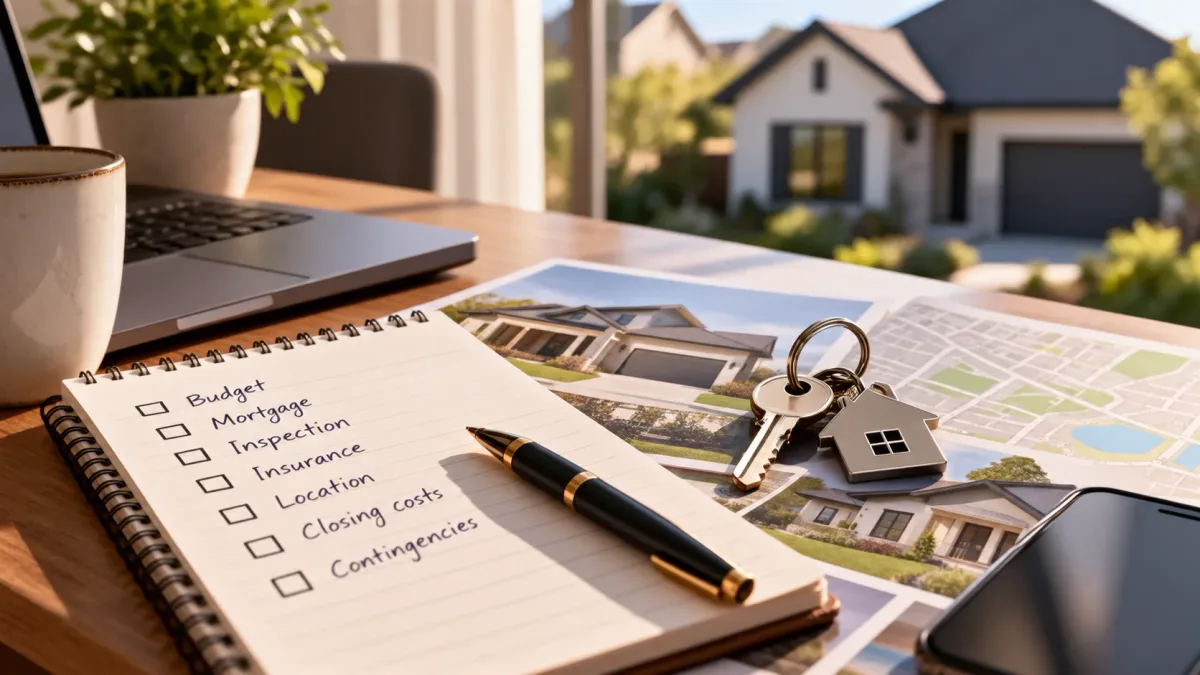
A home purchase becomes easier to evaluate when the key risks are grouped into finances, property condition, location, and the transaction itself.
What to know before buying a house checklist covering budget, mortgage, inspection, insurance, location, and closing
Area | What to check before buying |
|---|---|
Budget | Total monthly cost, not just mortgage principal and interest |
Savings | Down payment, closing costs, moving costs, emergency reserve |
Credit | Reports, score, existing debt, recent credit changes |
Mortgage | Loan type, rate, fees, insurance, total borrowing cost |
Location | Commute, taxes, noise, services, disaster exposure |
Insurance | Availability, premium, exclusions, additional coverage |
Property | Roof, HVAC, plumbing, electrical, drainage, structure |
Inspection | Major defects, safety issues, specialized inspections |
Taxes | Current bill, reassessment possibility, exemptions |
HOA | Dues, reserves, restrictions, assessments, litigation |
Contract | Financing, inspection, appraisal, and other contingencies |
Closing | Closing Disclosure, cash to close, final loan terms |
Future | Repair costs, resale, expected time in the home |
The strongest decision comes from evaluating all of these together. A favorable mortgage rate cannot fix a problematic property, and a beautiful home cannot fix a monthly payment that is too high.
Common Mistakes to Avoid Before Buying a House
The most expensive mistakes usually happen when buyers move too quickly or focus on the wrong number.
Several mistakes deserve particular attention.
Shopping Before Knowing the Budget
Touring homes above a comfortable price range can reset expectations and make realistically affordable properties feel disappointing.
Set the financial limit before falling in love with a house.
Using Every Dollar for the Down Payment
A larger down payment can reduce the loan amount, but an empty savings account creates risk immediately after closing.
Keep enough liquidity for ownership costs and unexpected repairs.
Ignoring Insurance Until the End
Insurance availability and premiums can change the economics of a property.
Check early, especially in areas exposed to significant natural hazards.
Treating Cosmetic Updates as Evidence of Condition
New flooring and fresh paint do not reveal the condition of the roof, sewer, electrical panel, foundation, or HVAC system.
Evaluate the expensive components separately.
Skipping Due Diligence to Win the Offer
Competitive markets can create pressure to remove protections.
A winning offer is not a win if the buyer takes on risks they cannot afford.
The Bottom Line
What to know before buying a house comes down to much more than whether the lender approves the mortgage. The right home should fit the buyer’s monthly budget, cash reserves, long-term plans, risk tolerance, and ability to handle repairs after closing.
Before making an offer, understand the neighborhood, property condition, insurance, taxes, HOA obligations, loan terms, contingencies, and major systems. Before closing, review the financial documents carefully and confirm the property is still in the expected condition.
A house can be changed after purchase, but some mistakes are expensive or impossible to undo. The best time to identify them is before the buyer becomes legally and financially committed.
Frequently asked questions
What is the most important thing to know before buying a house?
The most important thing to know before buying a house is the true cost of ownership. Include the mortgage, property taxes, insurance, HOA dues, utilities, maintenance, and repairs rather than judging affordability by the listing price alone.
What should a first-time buyer know before buying a house?
A first-time buyer should understand the full budget, mortgage options, credit, inspection process, property taxes, insurance, HOA rules, closing costs, contingencies, and the condition of the home’s major systems.
How much money should you have before buying a house?
There is no single amount that applies to every buyer. Plan for the down payment, closing costs, moving expenses, initial home expenses, and enough savings to handle emergencies after closing.
What should you check before making an offer on a house?
Check the property’s condition, neighborhood, taxes, insurance availability, HOA information, major systems, comparable prices, and the likely total monthly cost. Also understand which contingencies will be included in the offer.
Is a home inspection really necessary?
A home inspection is not universally required by law, but it can reveal property problems that are difficult to identify during a showing. Buyers should understand the risks before deciding whether to waive or limit inspection protections.
Is mortgage preapproval enough to know what house you can afford?
No. Preapproval reflects what a lender may be willing to finance based on its underwriting criteria. Buyers still need to decide whether the resulting payment fits comfortably with their own budget and savings goals.
What hidden costs should you know before buying a house?
Common costs beyond the purchase price include property taxes, homeowners insurance, HOA dues, closing costs, maintenance, repairs, utilities, moving expenses, and potential mortgage insurance.
What should you know about property taxes before buying a house?
Verify the current tax bill, local tax rules, possible reassessment after purchase, exemptions, and special assessments. Property tax practices vary by state and local jurisdiction.
What should you know about homeowners insurance before buying a house?
Confirm that coverage is available for the property, estimate the premium, understand the deductible and major exclusions, and determine whether separate flood, earthquake, or other coverage may be needed.
What should you do three days before closing?
For most covered mortgages, review the Closing Disclosure that must be provided at least three business days before closing. Compare the loan terms, fees, monthly payment, and cash to close with what was previously expected.
Sources
- Consumer Financial Protection Bureau, Buying a house
- Consumer Financial Protection Bureau, Exploring your loan choices
- Consumer Financial Protection Bureau, Closing disclosure explainer
- Consumer Financial Protection Bureau, Closing on your new home
Spotted an error? Tell our editors. Read our corrections policy.